
Bathroom underfloor heating in QLD: the electrical install no one talks about
Underfloor heating mats need a thermostat, a 30mA RCD, an IP-zoned wall switch, and a load that often pushes a small switchboard upgrade.
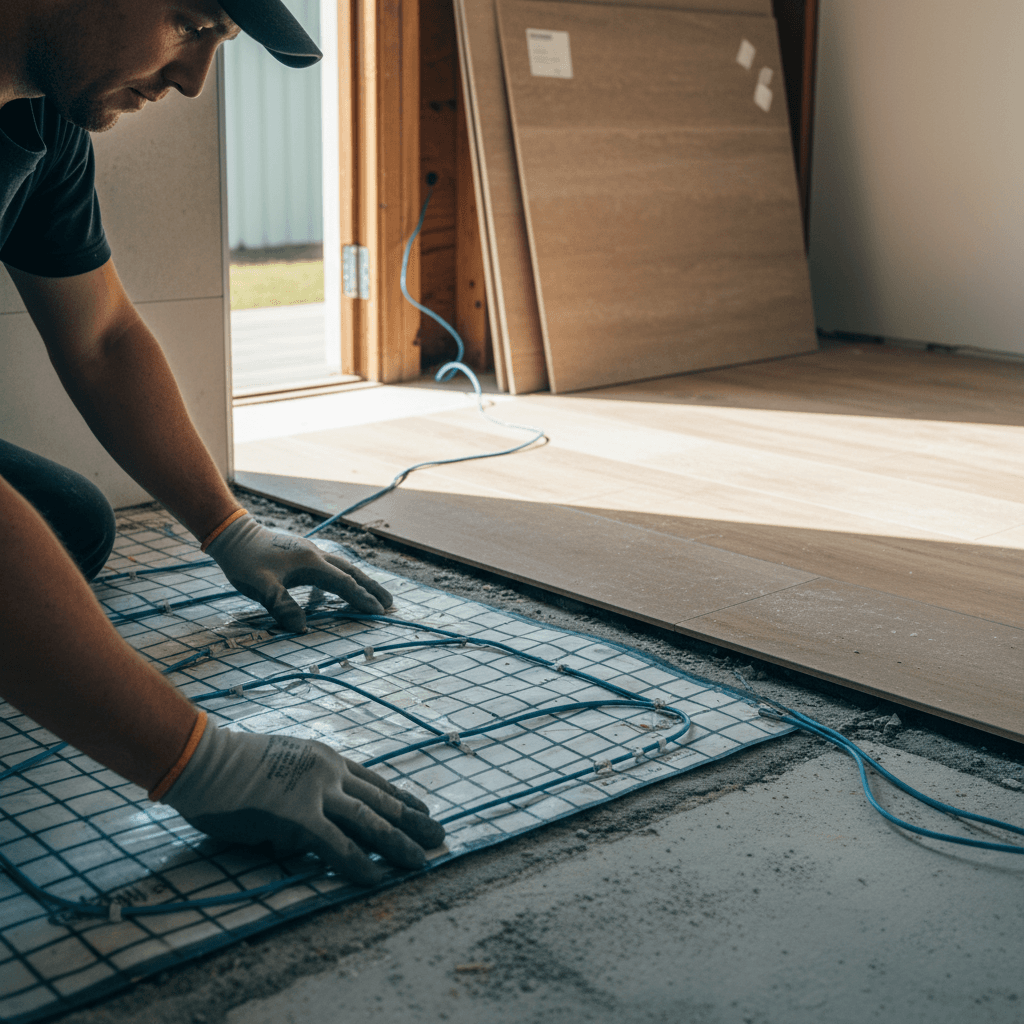
Bathroom underfloor heating is one of the few electrical upgrades in Brisbane I genuinely think is worth it regardless of budget. Warm tiles on a winter morning, no towel rail eating into your wall space, and a bathroom that dries out faster after showers (which helps with mould in our humid summers).
The problem is that most tile suppliers and bathroom renovators don't explain the electrical side clearly. Here's what a compliant install in Camp Hill, Bulimba or Carindale actually involves.
How electric underfloor heating works
Electric underfloor heating for bathrooms uses a resistance heating mat: a thin, pre-fabricated element glued directly onto the subfloor (concrete slab or fibre-cement sheet) before the tile underlay and tile go down. The mat generates heat through resistance, like an electric blanket, and a thermostat controls the temperature and hours of operation.
There are two main configurations:
- Loose cable systems: A single heating cable snaked across the floor in loops. More flexible for odd shapes, more time-consuming to install.
- Heating mats: Pre-spaced cable on a fibreglass mesh. Roll it out and cut the mesh (not the cable) to fit around obstacles. Faster to install, preferred for standard-shaped bathrooms.
Output is typically 100-180W per square metre. A 5m² bathroom at 150W/m² = 750W, which is modest. A 10m² bathroom at 180W/m² = 1,800W, which is getting close to a 2kW heater.
Load: how much power it draws
For most Brisbane bathrooms, the load from underfloor heating is 400-1,800W. At 240V, that's 1.7-7.5A.
Manageable on its own, but worth considering the full bathroom circuit load:
- Exhaust fan: 15-25W
- Heat lamp (if fitted): 250-500W per globe, often 2-globe = 500-1,000W
- Towel rail (electric): 60-150W
- Underfloor heating: 400-1,800W
- Shaver socket: typically 20W
If you stack a heat lamp, underfloor heating and a towel rail on the same circuit, you can easily pull 3kW from one bathroom circuit. That's fine on a 16A circuit (rated to 3.84kW continuous) but only just. I prefer to put underfloor heating on its own circuit or confirm the existing bathroom circuit has capacity before adding it.
RCD protection requirements
A 30mA RCD (safety switch) is mandatory on all final sub-circuits in a bathroom, full stop. The underfloor heating circuit is no exception.
Beyond the standard RCD requirement, there's an additional consideration specific to underfloor heating: most manufacturers recommend a residual current device with a thermal cutout or, alternatively, a dual-pole RCBO rated for the mat load. This ensures both active and neutral are disconnected on a trip. Check the mat manufacturer's installation manual for the exact requirement before purchasing, as some mats specify this.
If your bathroom circuit already has a 30mA RCBO at the switchboard, you're likely fine. If the circuit is covered by a shared RCD arrangement (common in pre-2005 Brisbane homes), a dedicated RCBO for the bathroom or underfloor circuit specifically is worth fitting at the same time as the heating mat.
Thermostat placement and zone rules
This is the part that directly involves bathroom zone compliance. The thermostat is a fixed electrical device, which means it must be located outside bathroom zones 1 and 2.
A quick reminder of the zones:
- Zone 0: Inside the bath or shower.
- Zone 1: Above the bath or shower up to 2.25m from the floor, and within 0.6m horizontally of the shower opening.
- Zone 2: 0.6m beyond Zone 1, horizontally.
The thermostat must sit outside Zone 2. In a small bathroom this often means it ends up just outside the shower screen line, or on the wall adjacent to the door. In very small bathrooms, the thermostat sits in the hallway immediately outside the door, which is entirely fine electrically and often more convenient to use.
The thermostat also needs to be rated for the mat load. Most mat controllers are rated for 3.6kW (15A) or 4.8kW (20A). Confirm your mat's wattage against the controller spec before purchasing. Floor sensor cable from the thermostat runs under the tile to sense the floor temperature, not the air temperature.
Coordinating with the tile installer
This is where bathroom renos fall apart if the sparky and tiler are not in sequence. The mat goes down before the tiles. The sequence is:
- Sparky roughs in the supply cable and thermostat box (before walls are tiled).
- Tiler preps the subfloor, any self-levelling compound or underlay that goes under the mat.
- Sparky lays and tests the mat with a resistance meter before the tiler starts. Document the resistance reading; you'll want it for the warranty if a tile cracks a cable years later.
- Tiler installs underlay over the mat, then tiles. Zero pressure on the mat cable during tiling; a snapped tile is no excuse for pressure on the heating element.
- Sparky returns for final connections: thermostat, final test, certificate.
The resistance test before tiling is the one you cannot skip. Once the tiles are down, diagnosing a damaged mat cable means lifting tiles. Test it before and after tiling, and document both readings.
See bathroom electrical zones explained for the full zone breakdown relevant to other bathroom fittings.
Cost of the electrical scope
The electrical scope for a bathroom underfloor heating install in Brisbane (2026) typically runs:
- Small bathroom (under 5m²), existing compliant bathroom circuit: $480-$700 (rough-in, mat installation, testing, thermostat, final connections).
- Medium bathroom (5-10m²): $650-$900.
- Above + new dedicated circuit needed: Add $250-$450.
- Above + switchboard upgrade needed (no spare positions): Add $1,400-$2,200.
The mat itself is a separate cost from the supplier ($250-$600 depending on area coverage and brand). I don't supply mats; I work with whatever the owner or builder has selected, but I'll check the spec against the controller requirements before we start.
If you're in Camp Hill, Bulimba or Carindale and you want to add underfloor heating to an upcoming bathroom reno, ring me on 0411 054 811 before the tiler is booked. Getting the electrical sequence right before the tiles go down avoids an expensive re-do.
, John
I'm John, local Camp Hill sparky, fully licensed, fixed-price quotes, lifetime workmanship warranty. Ring me direct on 0411 054 811 or send a quick message.
Keep reading
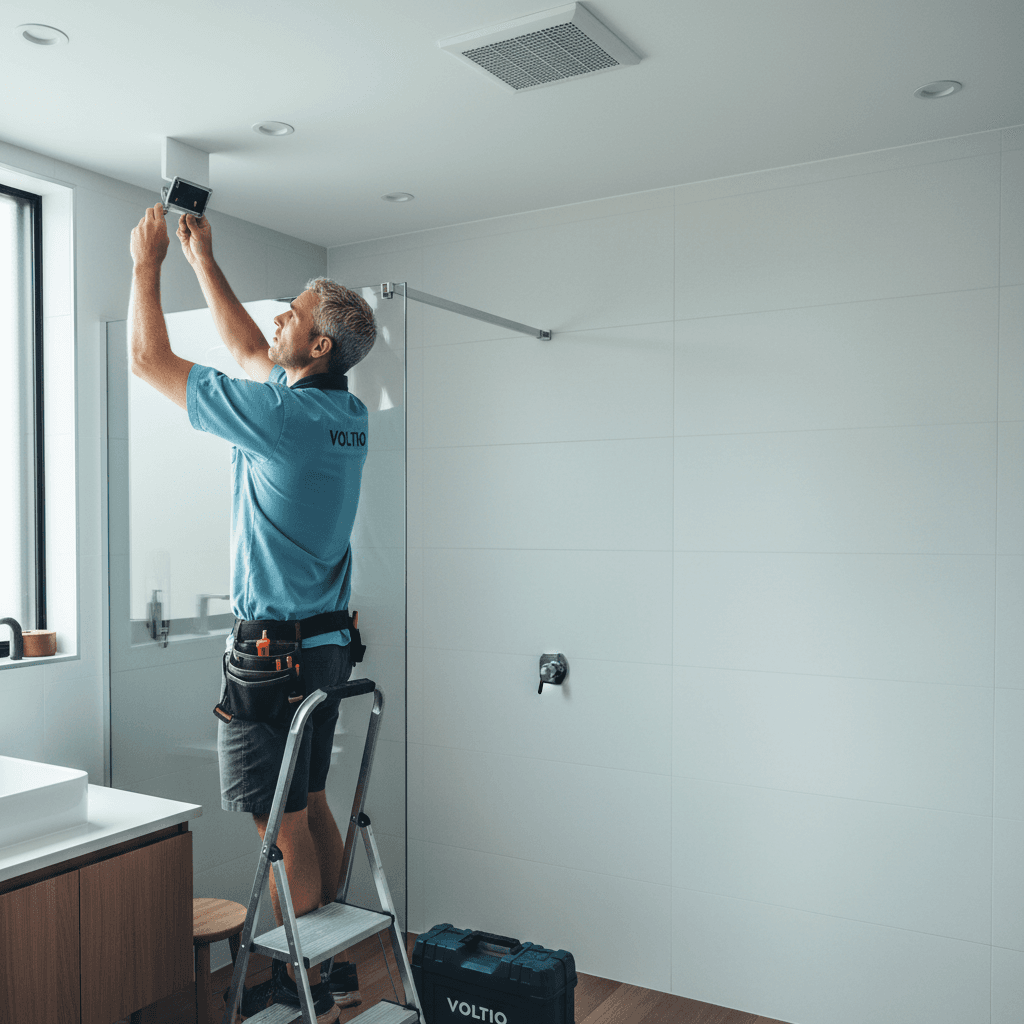
Bathroom electrical zones explained (so you don't kill anyone with a heat lamp)
Australia has strict bathroom electrical zones. The zones, the IP ratings, where lights go, where shavers go, where nothing goes.
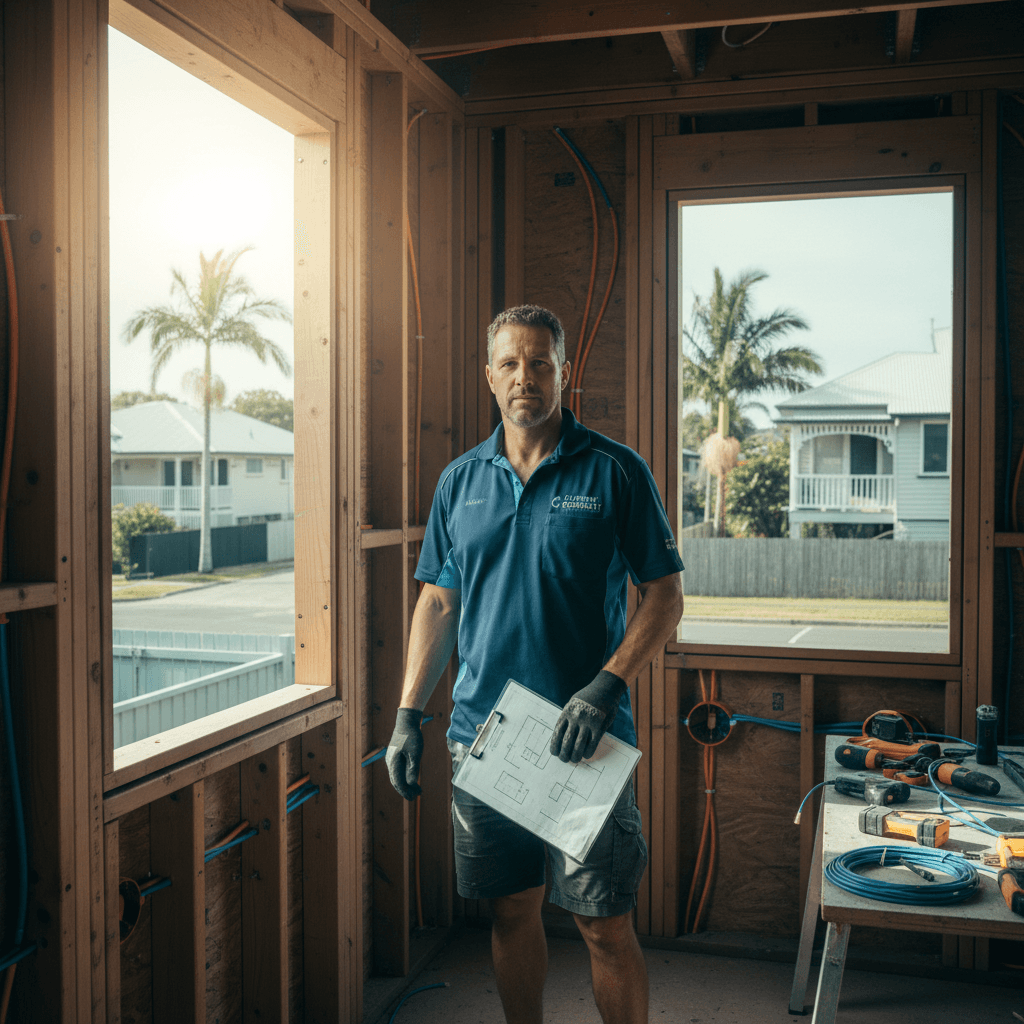
Renovation electrical checklist for Brisbane homes (the one your builder won't give you)
What to think about *before* the walls go back up. The 12-point electrical checklist for Brisbane renovations, from powerpoint locations to data cabling.