
Bathroom electrical zones explained (so you don't kill anyone with a heat lamp)
Australia has strict bathroom electrical zones. The zones, the IP ratings, where lights go, where shavers go, where nothing goes.
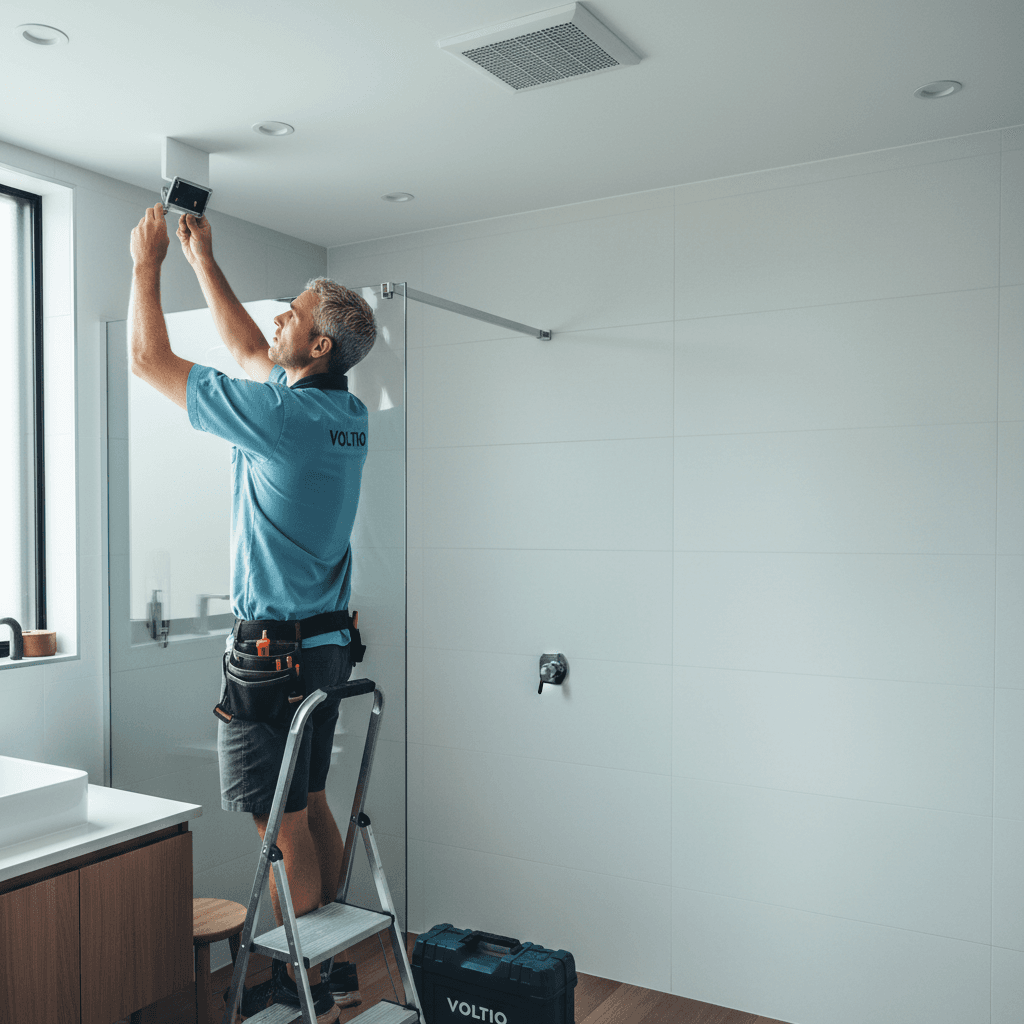
Water and electricity have a well-documented disagreement. The wiring rules resolve this by dividing bathrooms into proximity zones and specifying exactly which electrical equipment is permitted in each zone. Get it wrong and you've installed a legal and physical hazard. I see non-compliant bathroom electrical work in Brisbane homes fairly regularly, most often during renovations where the owner or their tiler has repositioned fittings without understanding the zone restrictions.
Here's the complete guide to bathroom electrical zones in Australia, written for someone who is renovating a bathroom in Bulimba, Camp Hill, or Carina and needs to brief their sparky correctly.
Zones 0, 1, and 2 explained
The wiring rules define three zones in a bathroom, measured relative to the water source (bath, shower rose):
Zone 0: Inside the water. Zone 0 is the interior of the bath or shower enclosure, below the rim of the bath or below the threshold of the shower. This is where the water actually is. Electrical equipment here must be SELV (Safety Extra-Low Voltage), typically 12V maximum, and rated IPX8 (submersible). In practice, almost nothing goes in Zone 0 except occasionally the power supply for a built-in bath spa motor, which has specific installation requirements.
Zone 1: Directly above the water. Zone 1 extends vertically above the bath or shower enclosure to a height of 2.25 metres above the floor. In a standard-height bathroom, this is the zone directly above the shower area up to the ceiling in most cases. Zone 1 equipment must be rated at least IPX4 (splash-proof from any direction).
Zone 2: Adjacent to the water. Zone 2 extends 0.6 metres horizontally beyond the edge of Zone 1, outward from the bath or shower. So if your shower recess ends at the wall, Zone 2 extends 0.6 metres out from that wall into the bathroom. Zone 2 equipment must also be rated at least IPX4.
Outside the zones: Beyond 0.6 metres from the Zone 1 boundary, you're in the general bathroom area. Standard IP20-rated equipment (normal indoor fittings) is permitted here, but the 30mA RCD requirement applies to the entire bathroom circuit regardless of zone.
The catch: bathroom ceilings are almost always within Zone 1 or Zone 2. The ceiling directly above a shower or bath is in Zone 1. This is why your bathroom downlights cannot be standard IP20 fittings: they sit in Zone 1 or Zone 2 and must be IP-rated accordingly.
IP ratings and what they mean
IP stands for Ingress Protection. The IP code has two digits:
- The first digit covers solid particle protection (1=large objects through 6=dust-tight).
- The second digit covers water ingress protection (1=dripping through 8=full submersion).
For bathrooms:
- IPX4: Protected against water splashing from any direction. Required for Zone 1 and Zone 2.
- IPX5: Protected against water jets. Required for some specific applications (like an accessible shower where a handheld rose can be directed at the fitting).
- IPX7: Protected against temporary submersion up to 1 metre. Required for Zone 0.
The most common bathroom downlight rating is IP44 or IP54, which meets the Zone 1 and Zone 2 requirement. When I supply downlights for a bathroom renovation in Brisbane, they're IP54 LED as standard. Standard indoor downlights (IP20) are not permitted in a bathroom.
A common mistake: installing an IP44-rated downlight in a shower recess in an accessible shower where the handheld shower rose could spray directly at the fitting. In that situation, IP65 or higher is appropriate.
What can go where
Here is the practical breakdown by fitting type:
| Fitting | Zone 0 | Zone 1 | Zone 2 | Outside zones | |---|---|---|---|---| | Standard powerpoint | No | No | No | Min 3m from shower, outside zones | | IP44+ downlight | No | Yes | Yes | Yes | | Standard downlight (IP20) | No | No | No | Yes | | Exhaust fan (IP44+) | No | Yes | Yes | Yes | | Heat lamp (IP rated, correct wattage) | No | Yes* | Yes | Yes | | Shaver outlet (approved type) | No | No | No | Min 3m from shower | | Illuminated mirror (double-insulated) | No | No | No | Min 3m from shower | | Wall switch | No | No | No | Outside the bathroom or pull-cord in zone |
*Heat lamps in Zone 1 require specific approvals and correct mounting; see below.
Socket outlets (powerpoints) are not permitted anywhere in Zone 1 or Zone 2. The minimum distance for a standard socket outlet from the boundary of Zone 2 is outside the zones entirely, and even then it must be at least 3 metres from the nearest shower rose or bath tap. In practice, this means no powerpoints inside a bathroom unless the bathroom is large enough that there's space clearly beyond the 3-metre mark, which almost never happens in a standard Brisbane bathroom.
Switching: Wall switches must be outside the bathroom, or pull-cord switches can be inside (the pull cord is not electrically live and is rated accordingly). Many older Brisbane bathrooms have the light switch on the inside wall just inside the doorframe. If that switch is within Zone 2, it needs to be relocated or replaced with a pull-cord type.
Heat lamps: the most misunderstood bathroom fitting
Heat lamps are frequently installed incorrectly. Here's what the rules actually say:
Heat lamps approved for bathroom use in Australia must:
- Be specifically approved for bathroom/zone installation (the fitting carries the approval marking).
- Be mounted at the correct minimum distance from the shower rose or bath rim as specified in the product's installation instructions.
- Be rated IPX4 or better if they're installed in Zone 1 or Zone 2.
- Be on a separate circuit or sub-circuit from the lighting, protected by a 30mA RCD.
- Be controlled by a timer switch (mandatory for heat lamps) to prevent being left on indefinitely.
The most common breach I see: a standard non-IP-rated heat lamp bought from a hardware store, installed by a handyman in the ceiling above the shower, with no zone assessment and no timer. That's a non-compliant installation.
Wattage: Most bathroom heat lamps are 275W infrared. Some older installations had 4-globe combination units running 1,100W total. The circuit must be sized for the load, and the heat from the lamps must not exceed the rating of the wiring above the fitting.
Shaver outlets and illuminated mirrors
A shaver outlet is a specific appliance, different from a standard powerpoint. It provides a 240V supply through a centre-tapped transformer that provides isolation from the earth, reducing shock risk in the wet environment. The shaver outlet must be:
- An approved shaver outlet (specifically rated and listed for bathroom use).
- Positioned at least 3 metres from the nearest water source, outside Zones 1 and 2.
- In many Brisbane bathrooms, this puts the shaver outlet above the vanity or on the wall beside it, provided the vanity is far enough from the shower.
Illuminated mirrors (LED mirrors with built-in lighting and sometimes demist pads) must be double-insulated (Class II) and are connected via a standard circuit. The connection point must be outside the zones. Most illuminated mirror installations feed from above the ceiling with the junction in the roof space, keeping the accessible connection away from the splash zones.
Exhaust fans and ventilation
Exhaust fans in bathrooms must be IP44 or better because they sit in Zone 1 or Zone 2 in most standard bathroom layouts. The ducting must exit the building (not into the roof space, which causes moisture problems and is a breach of the building code).
Combination exhaust fan / heat lamp / light units are common. The single-unit approach is neat but requires the entire unit to be IP-rated and zone-approved. Many units sold through hardware stores are not zone-approved and should not be installed in Zone 1.
Humidity-sensing fans are worth the extra cost in Brisbane's subtropical climate. They run automatically when humidity rises, regardless of the light switch. Hard-wired humidity sensors are more reliable than the plug-in adaptors.
For bathroom renovation electrical work in Bulimba, Camp Hill, or Carina, including zone-compliant downlight selection, heat lamp installation, and shaver outlet positioning, ring 0411 054 811.
, John
I'm John, local Camp Hill sparky, fully licensed, fixed-price quotes, lifetime workmanship warranty. Ring me direct on 0411 054 811 or send a quick message.
Keep reading
Renovation electrical checklist for Brisbane homes (the one your builder won't give you)
What to think about *before* the walls go back up. The 12-point electrical checklist for Brisbane renovations, from powerpoint locations to data cabling.
LED downlight upgrade guide: what to actually buy, and what it costs in Brisbane
What I install on every LED downlight upgrade in Brisbane, including the brands worth paying for, the dimmable trick most installers get wrong, and real prices.