
Smoke alarm beeping every 30 seconds with no fire? The fault tree, in plain English
Single beep, multiple beeps, chirping at 3am: each one means a different thing. The 4-step diagnostic that fixes 95% of nuisance alarms.
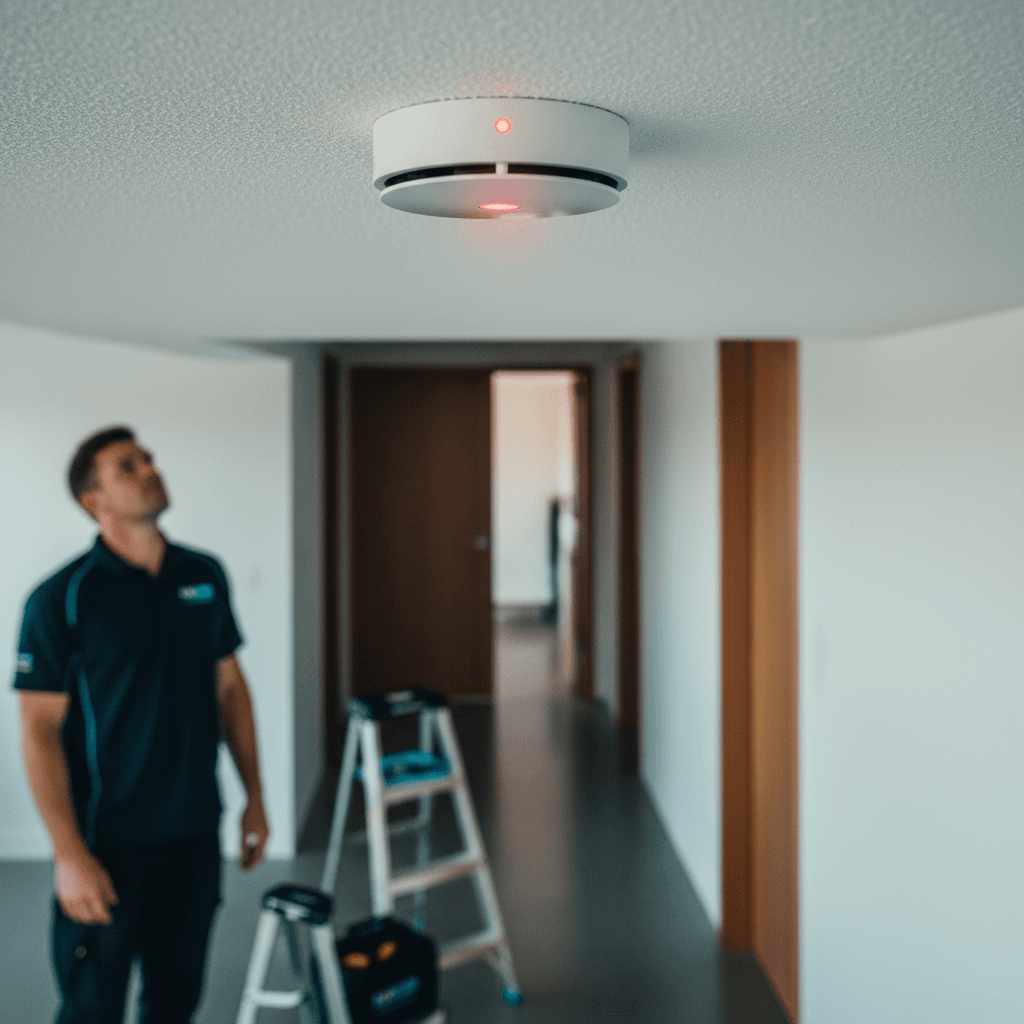
A smoke alarm beeping at 3am is one of the more reliably maddening experiences in home ownership. The instinct is to yank the battery out and deal with it in the morning. The problem is that some beep patterns are telling you something worth knowing, and some of those things get worse if you ignore them.
Here is the fault tree I walk homeowners through on the phone, in order of likelihood.
What each beep pattern actually means
Smoke alarms are not subtle. Their beep codes are fairly standardised:
- Single beep every 30-60 seconds: low battery. Almost always the cause of the 3am chirp, because batteries are at their lowest charge point when the house cools down overnight.
- Three beeps in a pattern, then silence: fault condition. Not a fire, not a low battery, but something wrong internally, or a fault on the interconnect line to another alarm.
- Continuous alarm (series of rapid beeps): treat as a real fire. Get out first, investigate second.
- Single beep every 30 seconds from a hard-wired alarm you just replaced the battery in: either end-of-life, a wiring fault, or the interconnect has detected a fault in another alarm on the network.
The continuous alarm deserves its own note. Even if you are 99% sure it is a nuisance alarm, treat it as real. Kitchen steam, insects inside the chamber, a bathroom exhaust fan, and cigarette smoke can all trigger a legitimate alarm response. Get everyone out of the affected area, confirm there is no smoke or heat source, and then press the hush button if available.
The low-battery chirp and what to do about it
For a hard-wired alarm with a 9V backup battery, the fix is straightforward: replace the 9V battery. Use a quality alkaline or lithium cell, not a leftover from the TV remote.
If your alarms are already QLD-compliant, they should have a 10-year sealed lithium battery and be hard-wired to mains. These alarms should not have a replaceable backup battery. If a hard-wired alarm with a sealed battery is chirping a low-battery code, two possibilities:
- The alarm has reached the end of its service life (10 years from the manufacture date on the back).
- There is a power supply issue on the mains feed to the alarm.
Do not try to crack open a sealed-battery alarm. It voids the approval, it usually breaks the unit, and it will not fix the underlying problem.
If your alarms are still running on replaceable 9V batteries and you are in QLD, be aware that from 1 January 2027 every home must have compliant photoelectric, interconnected, hardwired or 10-year lithium alarms. Patching a chirping old ionisation alarm with a new 9V is a temporary fix that will cost you more when you eventually have to replace the whole system. See our guide to QLD smoke alarm laws for the full picture.
End-of-life alarm: the one people miss
Every smoke alarm has a manufacture date stamped or printed on the back, usually in a small box near the compliance mark. The service life of a residential smoke alarm is 10 years from that date, not from the day you installed it. After 10 years, the sensing chamber degrades, the alarm becomes less reliable, and in some models the internal self-diagnostic circuit triggers the fault chirp to alert you.
This is the pattern I see most often in Camp Hill and Carina homes: the alarm is not the original one, someone replaced it five years ago, but they replaced it with an alarm that was already three years old sitting in a Bunnings stockroom. The alarm expires earlier than expected.
The fix is replacement. Before you replace, check the manufacture date on every alarm in the house. If any are within 12 months of the 10-year mark, replace the lot at the same time; it saves a callback.
While you have the alarm off the ceiling, also check whether it says "Photoelectric" on the back. If it says "Ionisation" or nothing, it is not compliant with the QLD rules that apply to properties being sold or leased, and to all properties from 1 January 2027.
Fault in the interconnected network
Modern interconnected photoelectric alarms communicate with each other via a radio signal (for wireless interconnect) or via a dedicated interconnect wire (for hard-wired interconnect). When one alarm detects a fault in another on the network, it can generate a fault chirp even if the faulty alarm itself is not chirping.
This is the source of a lot of confused calls where the homeowner is convinced the beeping is coming from one alarm but it is actually being relayed by its neighbour.
The diagnostic:
- Press and hold the hush or silence button on each alarm in turn. A fault chirp will be silenced on the specific alarm generating it (for 8-10 minutes).
- The alarm that, when silenced, stops the overall chirping is either the source of the fault or the one receiving the fault signal from another.
- Check that alarm's battery, mains connection, and manufacture date.
If you have a hard-wired interconnected system and one alarm has a wiring fault, the whole system can behave erratically. That is a sparky job, because pulling interconnect wire out of ceiling cavities requires a licence and usually some ceiling access.
When to replace vs reset
Replace the alarm (rather than just resetting or patching) if:
- The manufacture date on the back is more than 10 years ago.
- The alarm says "Ionisation" anywhere on the label.
- The alarm is not hard-wired and the QLD deadline applies to your property.
- The fault chirp returns within 48 hours of a battery replacement.
- The plastic is discoloured, yellowed, or showing UV degradation.
- The test button produces a weak or slow alarm sound.
A replacement hard-wired photoelectric alarm, supplied, installed, interconnected and tested by a licensed sparky, costs around $220 per alarm in Brisbane in 2026, including the compliance certificate. For a typical 3-bed home with 5 alarms, that is roughly $1,100 all in.
If you are not sure whether your alarms are compliant, send me a photo of the back of one of them to the number below and I'll tell you on the spot. Or book a smoke alarm inspection and we'll walk the house and give you a written report on every alarm in it.
Ring 0411 054 811 for same-day callouts across Camp Hill, Carina, Mt Gravatt and surrounding suburbs.
, John
I'm John, local Camp Hill sparky, fully licensed, fixed-price quotes, lifetime workmanship warranty. Ring me direct on 0411 054 811 or send a quick message.
Keep reading
Interconnected photoelectric smoke alarms: a complete guide for Brisbane homes
What they are, how they're different to old ionisation alarms, what brands actually work, and how the wireless interconnect works in practice.
QLD smoke alarm laws 2027: the simple version (and what it'll cost)
From 1 January 2027, every QLD home needs interconnected, photoelectric, hard-wired smoke alarms. Here's exactly what you need, where, and what it should cost.