
Safety switches explained: what they do, how to test them, and why one isn't enough
Safety switches are the device that saves your life when an appliance faults. Here's how they work, why most Brisbane homes don't have enough of them, and how to test the ones you've got.
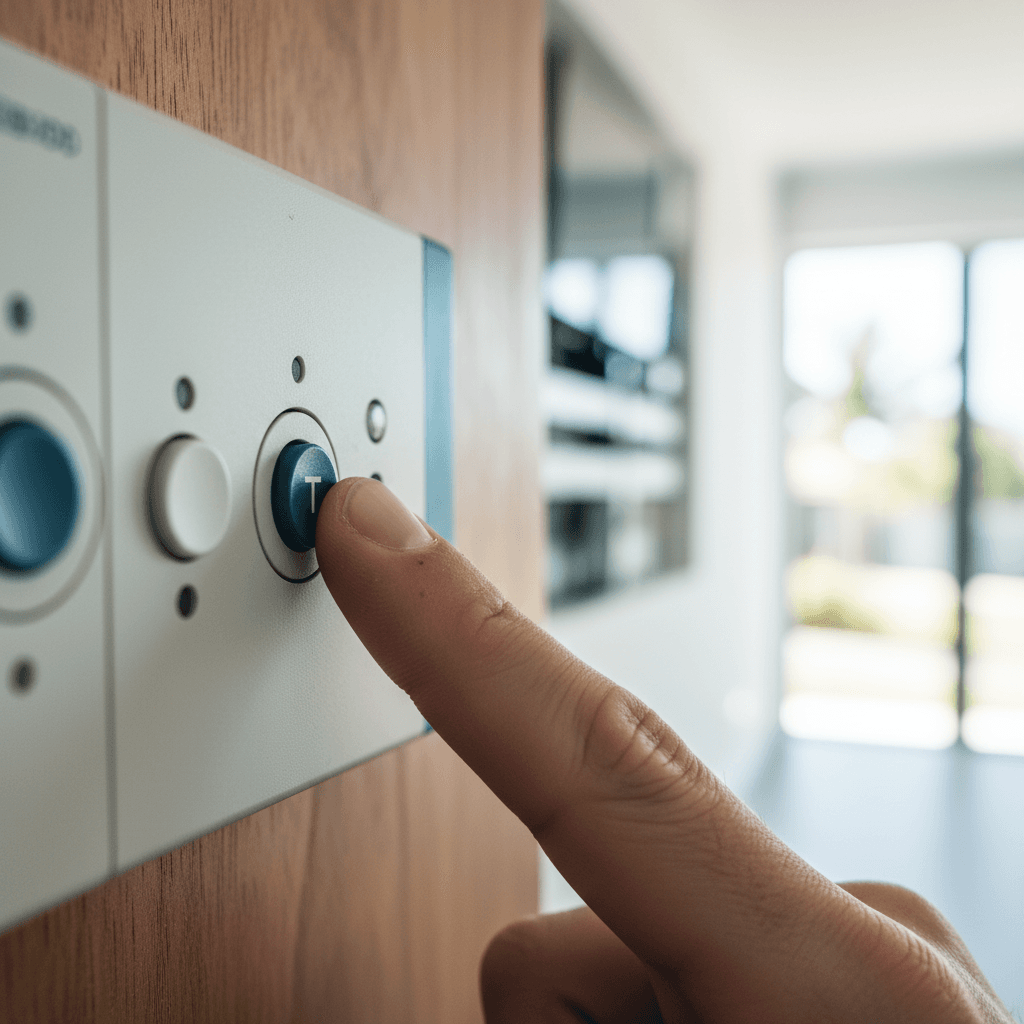
Most Brisbane homeowners think their switchboard has "safety switches" on it. Most Brisbane homeowners are wrong. Here's the actual rules.
What a safety switch actually does
A safety switch, properly called a Residual Current Device, or RCD, measures the current flowing out of your switchboard down the active wire, and the current coming back through the neutral. They should match. If even 30 milliamps is going somewhere it shouldn't, like through you, on its way to earth, the device snaps off in under 30 milliseconds.
That cut-off is what stops you being electrocuted by a faulty appliance.
It is not the same as a circuit breaker. A circuit breaker stops the cable from overloading and melting. An RCD stops you from being shocked. You need both. Modern RCBOs combine them in a single device per circuit.
RCD vs RCBO
- RCD, old-school. One device covering several circuits. If it trips, all those circuits go off, and you have to figure out which appliance caused it.
- RCBO, modern. One device per circuit. Combines an RCD and a circuit breaker. If your bathroom faults, your fridge stays on. This is what we install on every job.
If you open your switchboard and the test buttons are sparse, say, two test buttons covering a board with eight circuits, you have shared RCDs. That's the old way and it's due an upgrade.
How many do you need?
Under AS/NZS 3000:2018, every final sub-circuit in a domestic installation should be RCD-protected. So:
- Lighting, yes
- Power, yes
- Oven, yes
- Hot water, yes
- AC, yes
- Pool, yes
- Even the doorbell, yes
That means a typical Brisbane 3-bedroom home should have 8 to 12 RCBOs in the board, not the "one or two RCDs" that 1990s boards have.
If you don't, that's a switchboard upgrade waiting to happen.
How to test yours
Every six months:
- Open your switchboard.
- Find the small button labelled "T" or "Test".
- Press it firmly.
- The switch should snap immediately to the "off" position.
- Reset it.
If it doesn't snap off, it's no longer protecting that circuit. Ring 0411 054 811, we'll come and replace it (usually $240 fitted).
If you have multiple safety switches, test each one separately.
Rentals: the QLD requirement
Under QLD law, every rental property must have at least one functioning RCD on power circuits and one on lighting circuits, tested at the start of every new lease. Property managers typically push the cost onto the landlord and the testing onto a sparky, that's us. We do rental safety inspections starting at $190 and email you the certificate same-day.
, John
I'm John, local Camp Hill sparky, fully licensed, fixed-price quotes, lifetime workmanship warranty. Ring me direct on 0411 054 811 or send a quick message.
Keep reading
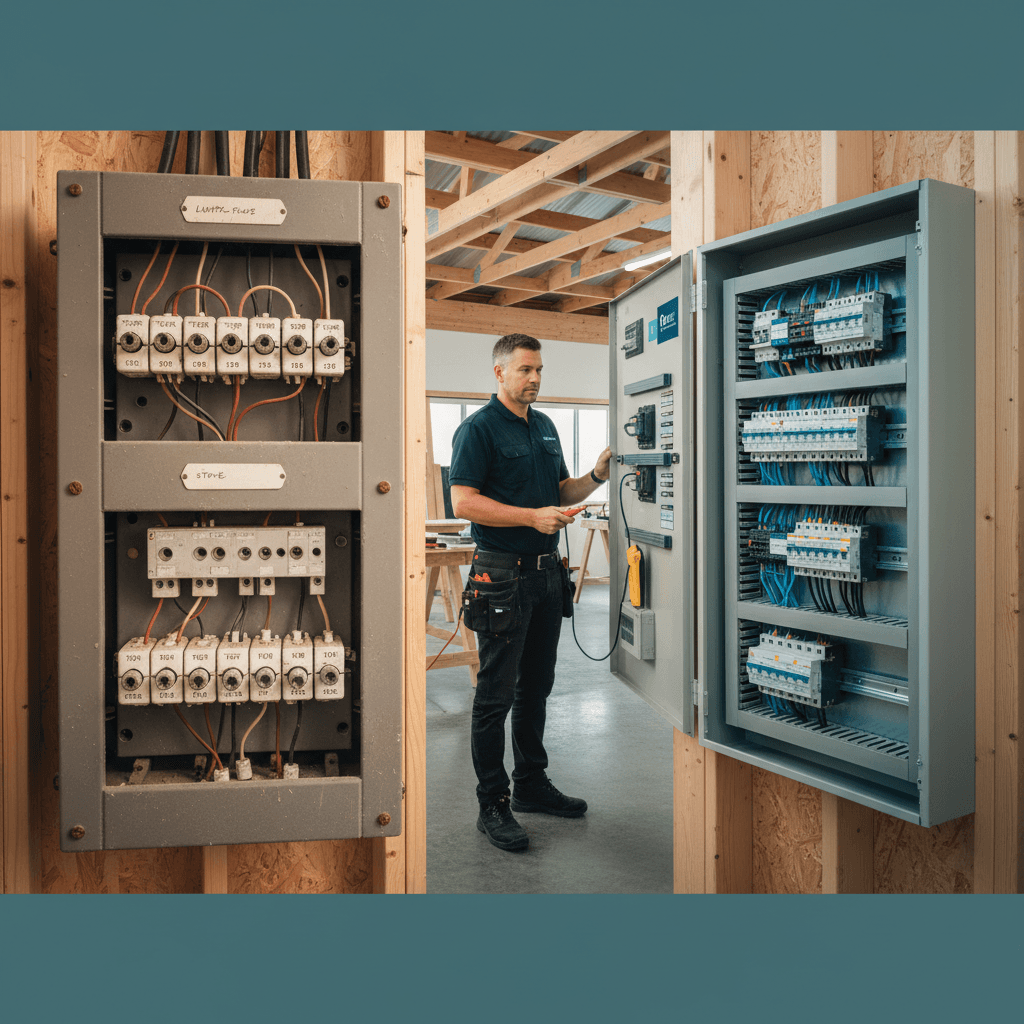
Old fuse box vs modern switchboard: a side-by-side guide for Brisbane homes
What's the actual difference between a 1970s ceramic-fuse box and a 2026 RCBO switchboard? A side-by-side breakdown of safety, compliance and cost.
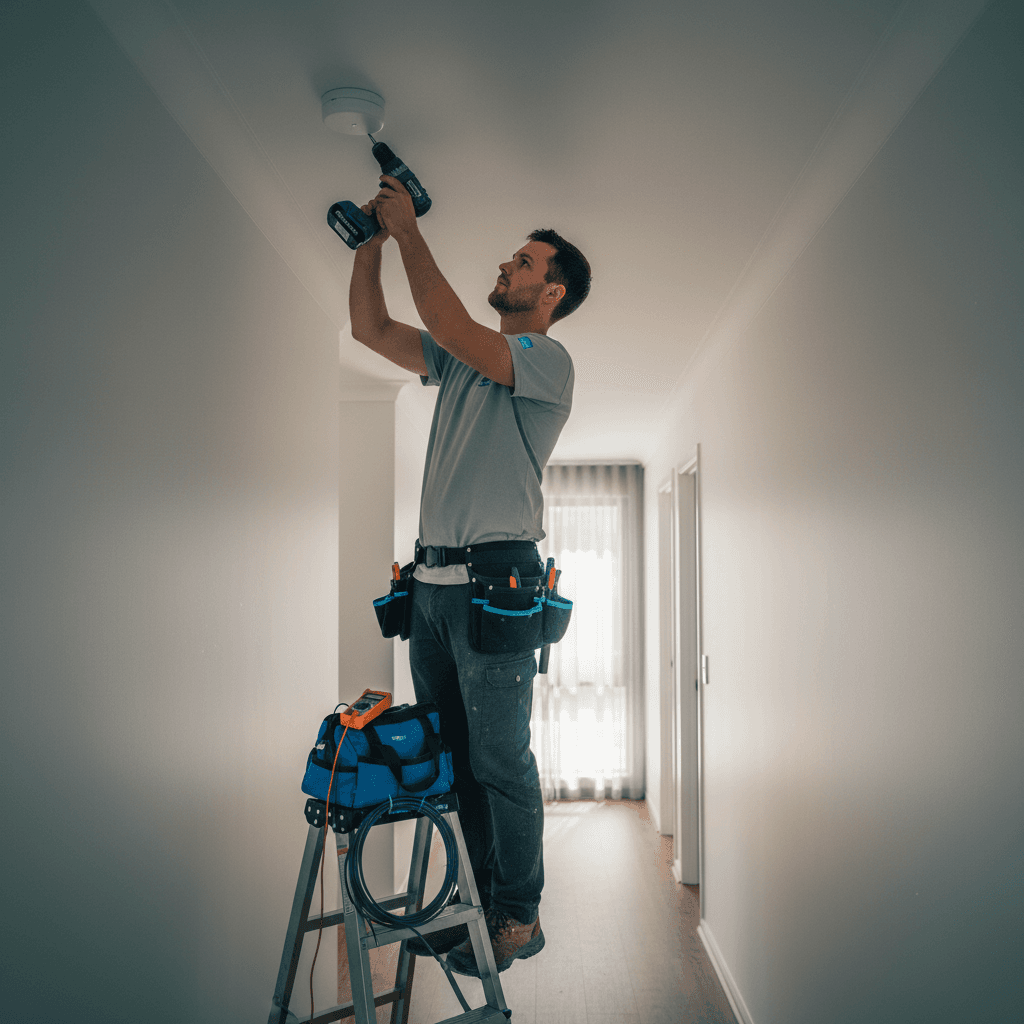
QLD smoke alarm laws 2027: the simple version (and what it'll cost)
From 1 January 2027, every QLD home needs interconnected, photoelectric, hard-wired smoke alarms. Here's exactly what you need, where, and what it should cost.