
Old fuse box vs modern switchboard: a side-by-side guide for Brisbane homes
What's the actual difference between a 1970s ceramic-fuse box and a 2026 RCBO switchboard? A side-by-side breakdown of safety, compliance and cost.
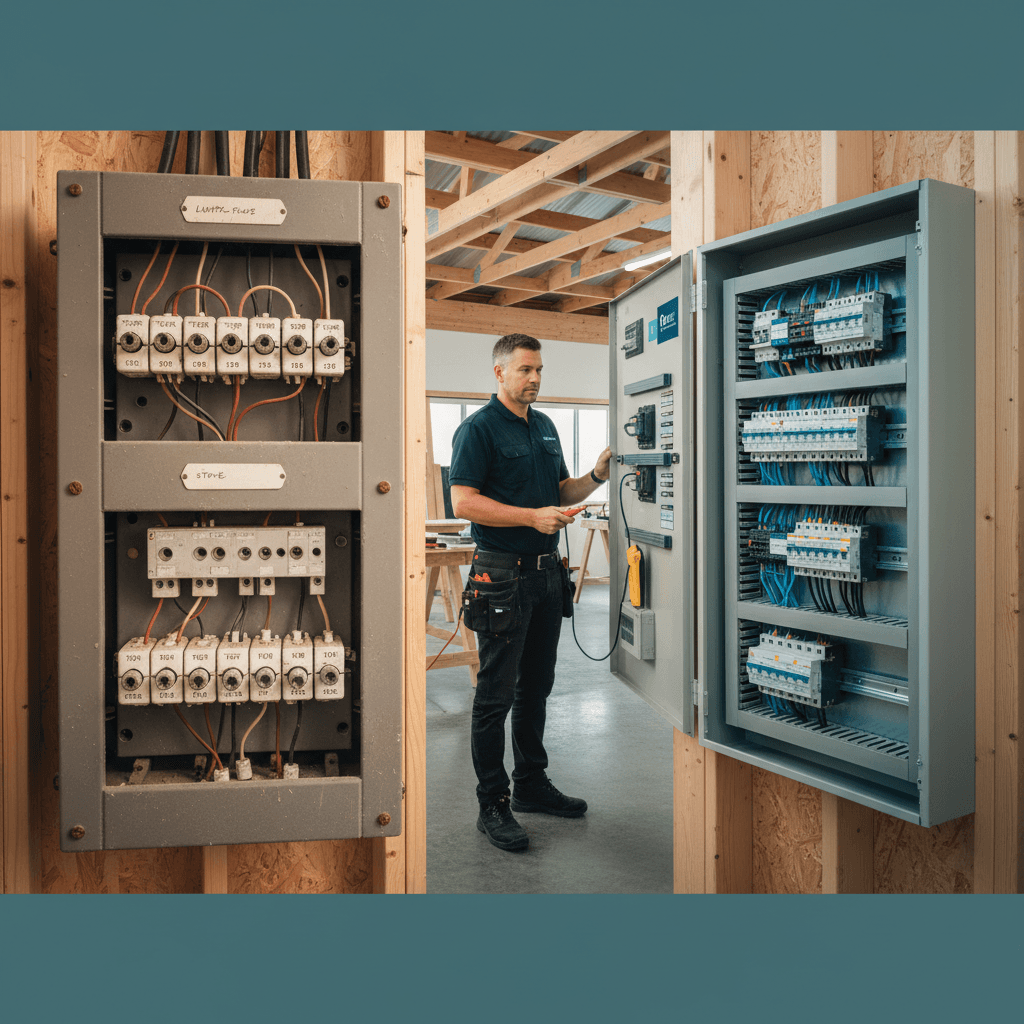
Most Brisbane houses built before 1990 still have an original ceramic-fuse switchboard in them. Some still work. Almost none of them are safe by today's standards. Here's the side-by-side, in plain English.
What a fuse box actually does
A fuse is a piece of soft wire designed to melt when too much current flows through it. That's it. When the wire melts, the circuit breaks, and (hopefully) the cable in your wall doesn't catch fire.
Two problems:
- It only protects the wire, not the human. A fuse will let several hundred milliamps flow through your body to earth without flinching, that's enough to kill you.
- It can be tampered with. Decades of homeowners replacing blown fuse wire with whatever was in the toolbox means many fuse boxes have been progressively over-fused, defeating the protection.
What an RCBO does (and why it's different)
An RCBO is two devices in one:
- A circuit breaker that does what the fuse used to do, protects the cable from overload.
- A residual current device (RCD / safety switch) that watches the difference between current going out the active and current coming back on the neutral. If even a tiny amount (30mA) is going somewhere it shouldn't, like through you, it trips in under 30 milliseconds.
That 30ms cut-off is the difference between a tingle and a hospital bed.
The safety gap
| Risk | Old fuse box | Modern RCBO board | |------|--------------|-------------------| | Cable overload (fire risk) | ✅ Protects | ✅ Protects | | Earth leakage (shock to human) | ❌ No protection | ✅ Trips in 30ms | | Arc fault | ❌ No protection | ✅ AFDD optional | | Tamper-resistant | ❌ Easy to bypass | ✅ Sealed unit | | Tested every 6 months | ❌ Can't test | ✅ Test button |
If anyone in your house could ever touch a faulty appliance, a kid in the bathroom, an adult outside the laundry, the gap above is the gap your fuse box hands you for free.
Compliance and certification
Under QLD law, new and modified electrical work must be installed and certified to AS/NZS 3000:2018, which mandates RCD protection. If you do anything significant to a circuit (adding a new powerpoint, replacing a heater circuit, adding a sub-board), the new work must be RCD protected.
That's where the "trickle upgrade" trap catches a lot of homeowners: a sparky adds an RCBO for the new bit, but the old fuses keep doing the old bits. The board ends up half-old, half-new, with cables crossing in places they shouldn't, and it's a worse mess than just doing it once.
Verdict, when do you actually have to upgrade?
You must upgrade if any of:
- You're selling and the inspection flags ceramic fuses or no RCDs
- You're renting it out (QLD law requires working RCDs on rentals)
- You're doing a significant renovation, EV charger, solar or battery install
- The board is showing physical signs of failure (smell, scorch, hum)
You probably should upgrade if:
- The board is over 25 years old
- You've had RCDs trip and not reset
- You can't identify which circuit does what (no labels)
- You've added two or more major appliances since the board was last updated
You can probably wait if:
- The board is post-2000, has RCDs on every circuit, the test buttons all work, and your power isn't tripping. (Still test the RCDs every 6 months.)
For a free, in-home opinion on your existing board, ring 0411 054 811 or book a switchboard quote. I'll give you the honest answer, even if it's "you don't need this yet".
, John
I'm John, local Camp Hill sparky, fully licensed, fixed-price quotes, lifetime workmanship warranty. Ring me direct on 0411 054 811 or send a quick message.
Keep reading
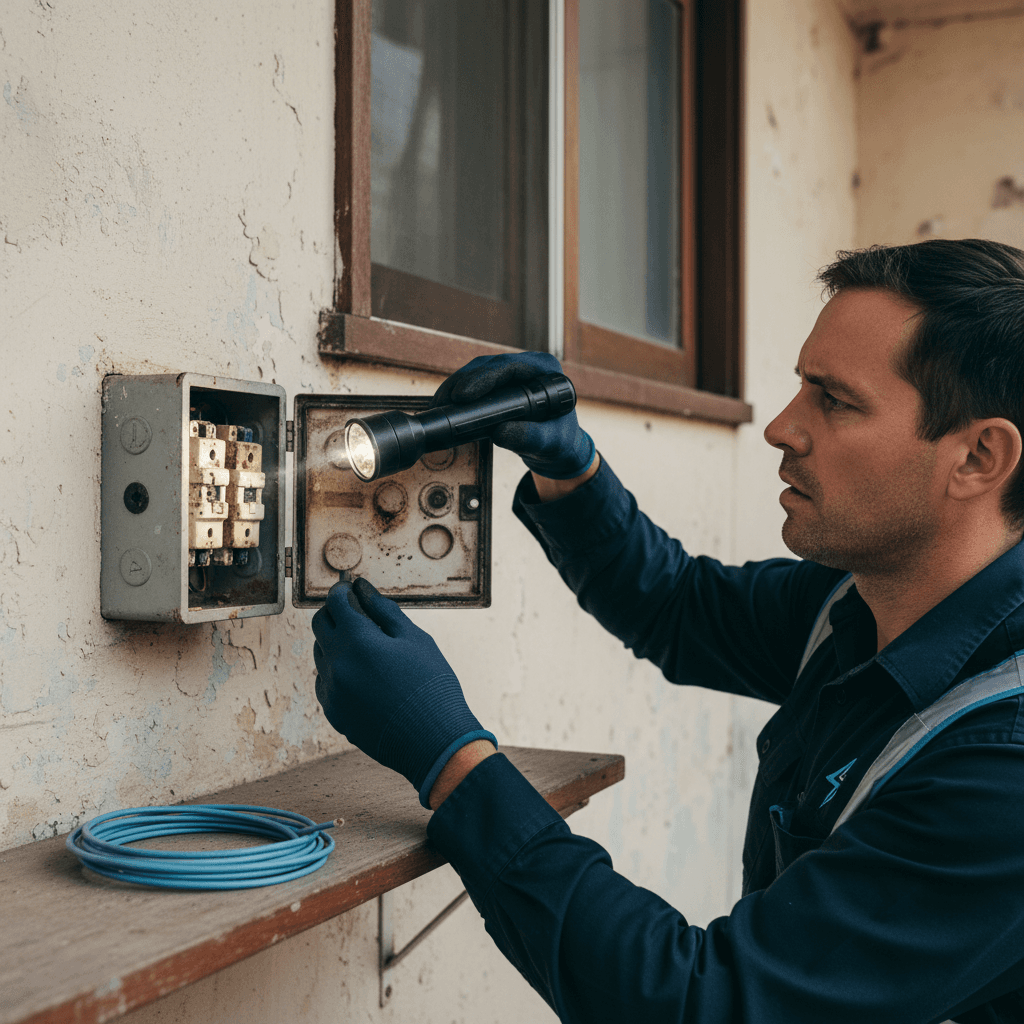
7 signs your switchboard needs upgrading (and why Brisbane homes are usually first in line)
Trips when the kettle's on. Burnt-plastic smell. Ceramic fuses. The seven signs your old switchboard is on its way out, and what a modern compliant board actually looks like.
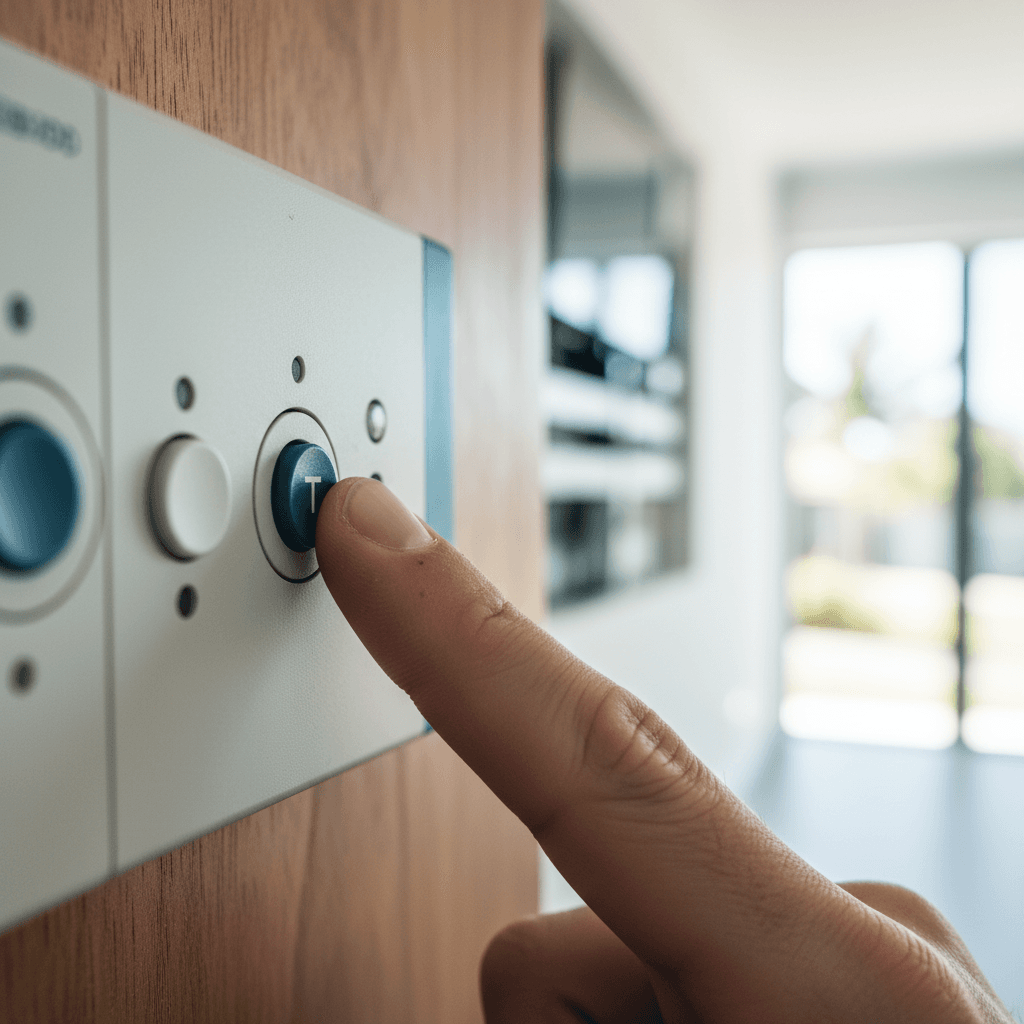
Safety switches explained: what they do, how to test them, and why one isn't enough
Safety switches are the device that saves your life when an appliance faults. Here's how they work, why most Brisbane homes don't have enough of them, and how to test the ones you've got.