
RCBO vs RCD vs MCB: what each one actually does (and why your home needs all three)
Plain-English breakdown of the three little switches in your switchboard, what each protects, what AS/NZS 3000 says you must have, and which one stops you dying.
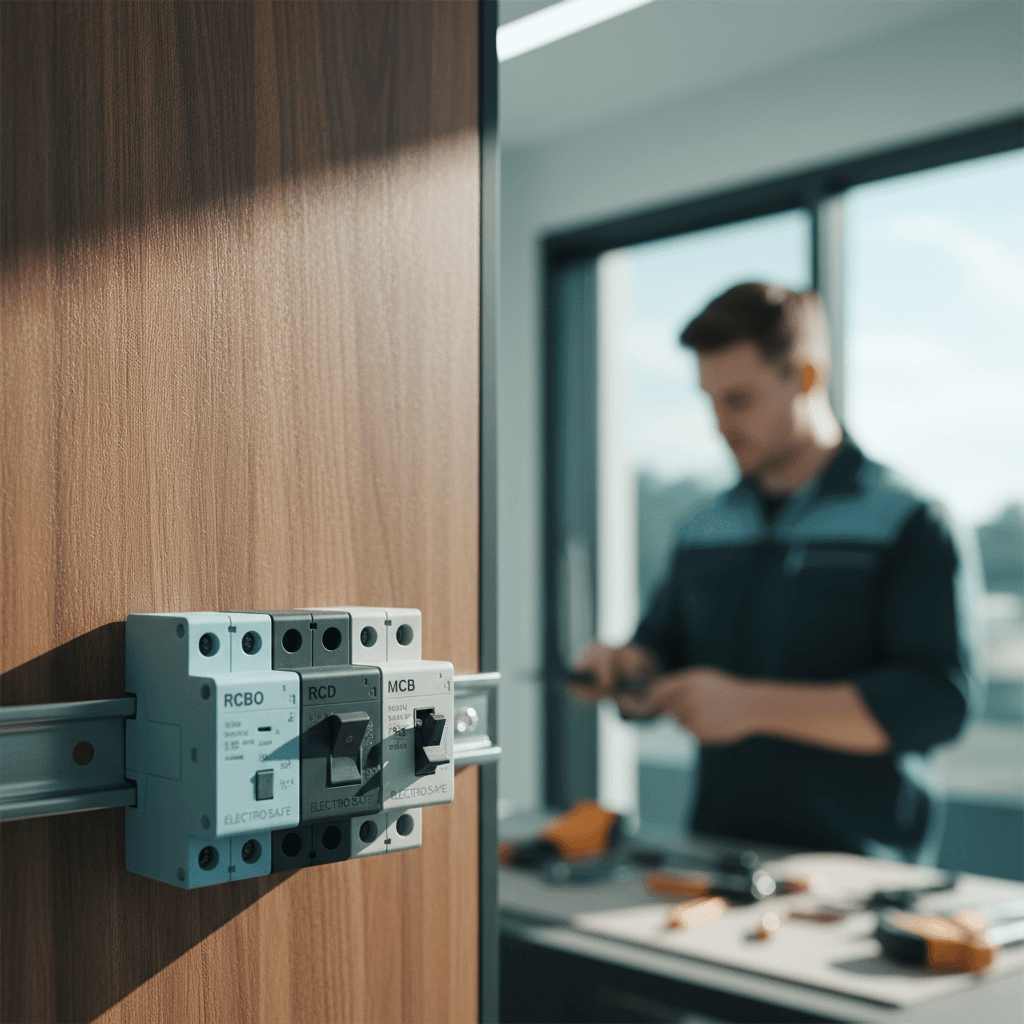
Open most Brisbane switchboards and you'll see a row of small switches in there. White ones, ones with a yellow test button, maybe a wider combined unit. Homeowners almost never know which does what, and that matters, because they do very different things, and one of them is the reason you're not dead from the faulty kettle you used last Tuesday.
Here is the plain-English version.
The MCB: your circuit breaker
MCB stands for Miniature Circuit Breaker. Its job is to protect the cable, not you.
When too much current flows through a circuit, the cable in the wall heats up. If it heats up enough, it ignites the surrounding material. An MCB monitors the current flowing through a circuit and trips, physically opening the switch, when that current exceeds the rated limit for a set period.
Common ratings you'll see in Brisbane homes:
- 6A or 10A: lighting circuits
- 16A or 20A: general power circuits
- 25A or 32A: dedicated heavy loads, air conditioning, stove, EV charger
An MCB will not trip from a person getting a shock. The current that flows through a human body to earth is typically 20-200 milliamps. An MCB is set to trip at amps, not milliamps. That is a factor of ten to a hundred times too slow to save you.
The RCD: the one that actually saves your life
RCD stands for Residual Current Device. You might also hear it called a safety switch or earth leakage device. These all mean the same thing.
The RCD works completely differently to a circuit breaker. It does not measure current flow, it measures the difference between the current going out on the active conductor and the current coming back on the neutral conductor. In a healthy circuit, those two values are identical. If something is going wrong, for example current is flowing through a person to earth, or through a faulty insulation path to the metal frame of an appliance, those two values no longer match.
When the difference reaches 30 milliamps, the RCD trips. It does this in under 40 milliseconds. That combination, 30mA in 40ms, is the standard set by the wiring rules because those values are below the threshold for cardiac fibrillation in most humans.
Thirty milliamps is about the current used by a small LED nightlight. It is also enough to kill you if it takes the wrong path through your chest.
An RCD will not protect against overloads or short circuits. It needs an MCB alongside it for that. Which brings us to the RCBO.
The RCBO: both jobs in one unit
RCBO stands for Residual Current Circuit Breaker with Overcurrent protection. It is an MCB and an RCD built into a single module.
One RCBO protects one circuit against both overcurrent (cable fire risk) and earth leakage (person shock risk). When I do a switchboard upgrade, I fit one RCBO per circuit. That means:
- Every circuit has its own breaker, so a fault on the kitchen circuit does not kill power to the whole house
- Every circuit has its own safety switch, so if the fault is an earth leakage event on any one circuit, only that circuit trips, not the whole house
The difference between a board with one shared RCD for all power circuits (which is what most Brisbane homes built before 2010 have) and a board with individual RCBOs is considerable. With a shared RCD, one intermittent fault anywhere on the house wiring will trip the entire power supply. That gets frustrating enough that people start resetting it without finding the fault. With individual RCBOs, you can isolate exactly which circuit has the problem and still have power everywhere else.
What the wiring rules require in QLD
The Australian Wiring Rules (AS/NZS 3000) and Queensland's electrical legislation work together here.
For new residential wiring installed after around 2002, RCD protection is required on all final sub-circuits in a domestic installation. This includes both power and lighting circuits. So any new work I do is RCBO-per-circuit by default.
For existing homes, the situation is more nuanced. If your board has the original 1980s or 1990s setup with a single shared RCD on the power circuits and no RCD on lighting, it is not illegal for it to stay that way, provided no new work is being done. But it is not compliant with the current standard and it offers much less protection.
Where it becomes mandatory is:
- Any renovation work that touches those circuits
- Selling or leasing the property (QLD requires working RCDs before a new tenancy)
- Any upgrade to the board itself
Safety switches explained in more detail here.
What I fit in Brisbane homes, and why
When I do a switchboard upgrade in Camp Hill, Carindale or anywhere else in our service area, my standard configuration is:
- One RCBO per circuit, 30mA rated, from Hager, Schneider or NHP
- A Type 2 SPD (surge protection device) at the top of the board
- A main switch with adequate current rating for the total load
- Clear, accurate circuit labelling on a label sheet inside the door
I do not fit boards with a single shared RCD for all power plus separate breakers. The protection outcome is worse for the homeowner, and the cost difference at upgrade time is not worth the compromise.
Common questions I get on-site
Q: My old board has two RCDs, one for power and one for lighting. Is that compliant?
It is better than a lot I see. It means you have earth leakage protection on both power and lighting circuits, which is good. It is not as good as individual RCBOs because a fault on any power circuit will trip all power circuits. But if the board is otherwise healthy, you are not in urgent territory.
Q: One of my breakers keeps tripping. Does the breaker need replacing?
Sometimes, but rarely. A breaker that keeps tripping is usually doing its job correctly, something on that circuit is drawing more current than it should. Unplug everything on the circuit, reset, and see if it holds. If it does, add appliances back one at a time. If it still trips with nothing plugged in, the wiring itself has a fault and you need a sparky.
Q: Can I add RCDs myself?
No. Switchboard work is licensed electrical work in QLD. The fine for unlicensed electrical work is substantial, and your home insurance will not cover a fire that starts from an installation a licensed electrician did not do.
If your board has anything other than individual RCBOs per circuit, ring me on 0411 054 811 and I can quote a proper upgrade.
, John
I'm John, local Camp Hill sparky, fully licensed, fixed-price quotes, lifetime workmanship warranty. Ring me direct on 0411 054 811 or send a quick message.
Keep reading
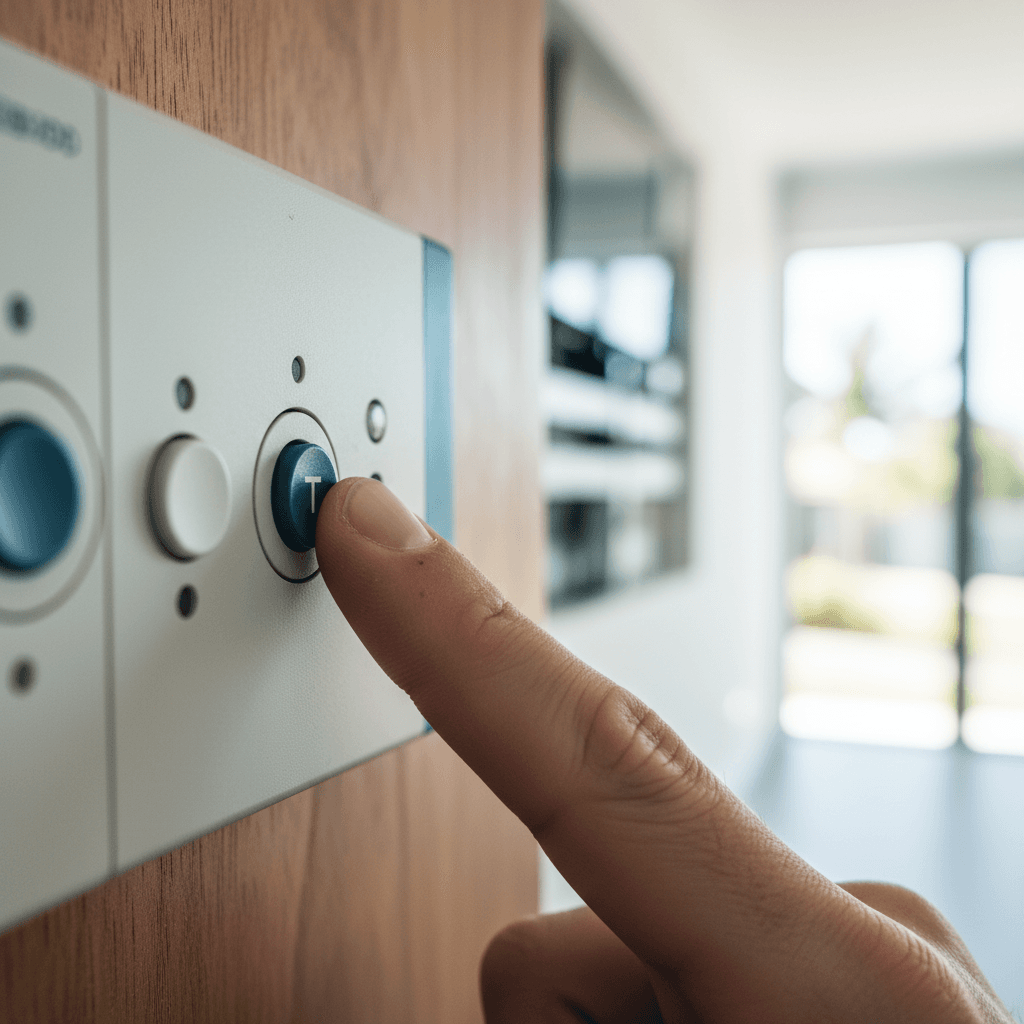
Safety switches explained: what they do, how to test them, and why one isn't enough
Safety switches are the device that saves your life when an appliance faults. Here's how they work, why most Brisbane homes don't have enough of them, and how to test the ones you've got.
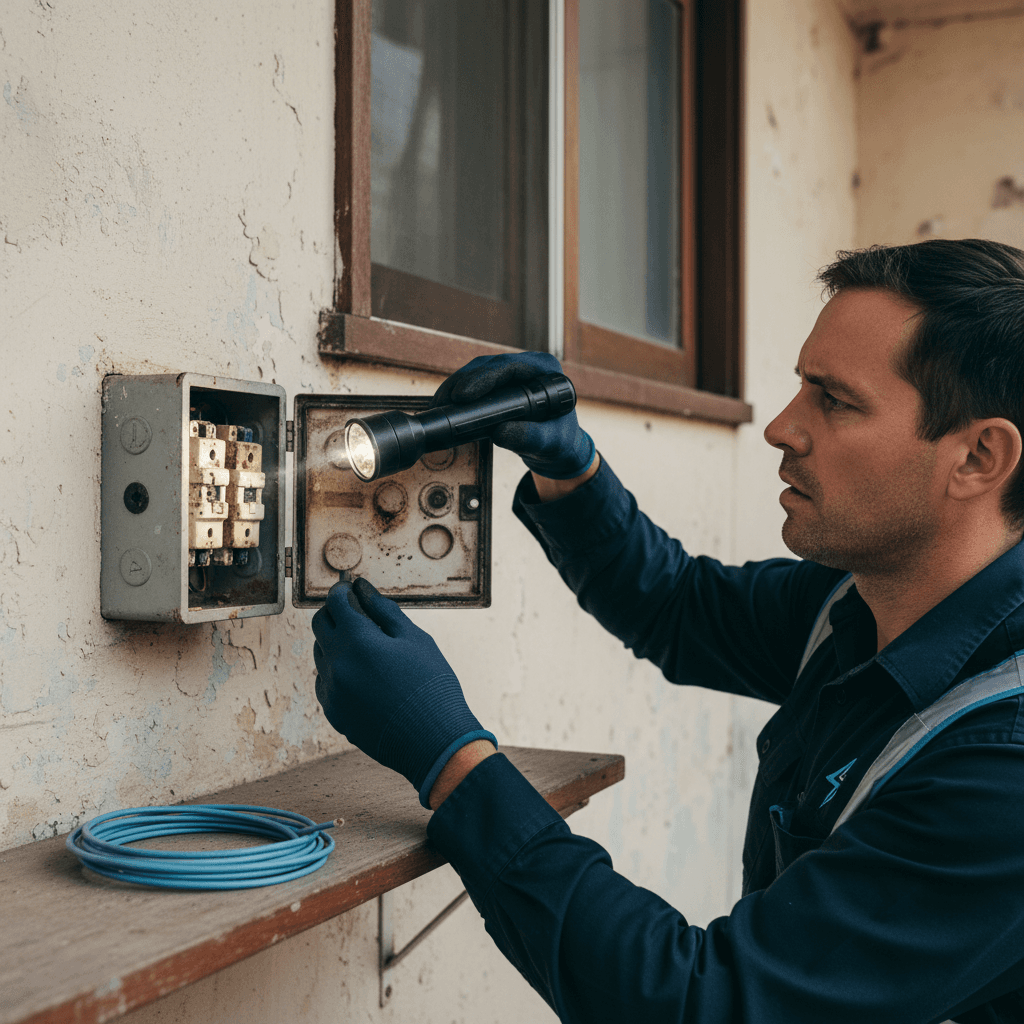
7 signs your switchboard needs upgrading (and why Brisbane homes are usually first in line)
Trips when the kettle's on. Burnt-plastic smell. Ceramic fuses. The seven signs your old switchboard is on its way out, and what a modern compliant board actually looks like.