
Choosing an electrician for an old Queenslander renovation: the questions that matter
Queenslanders have VIR cabling, no MEN, ceiling-rose-and-junction wiring nightmare. Here's what to ask before you hire a sparky for one.
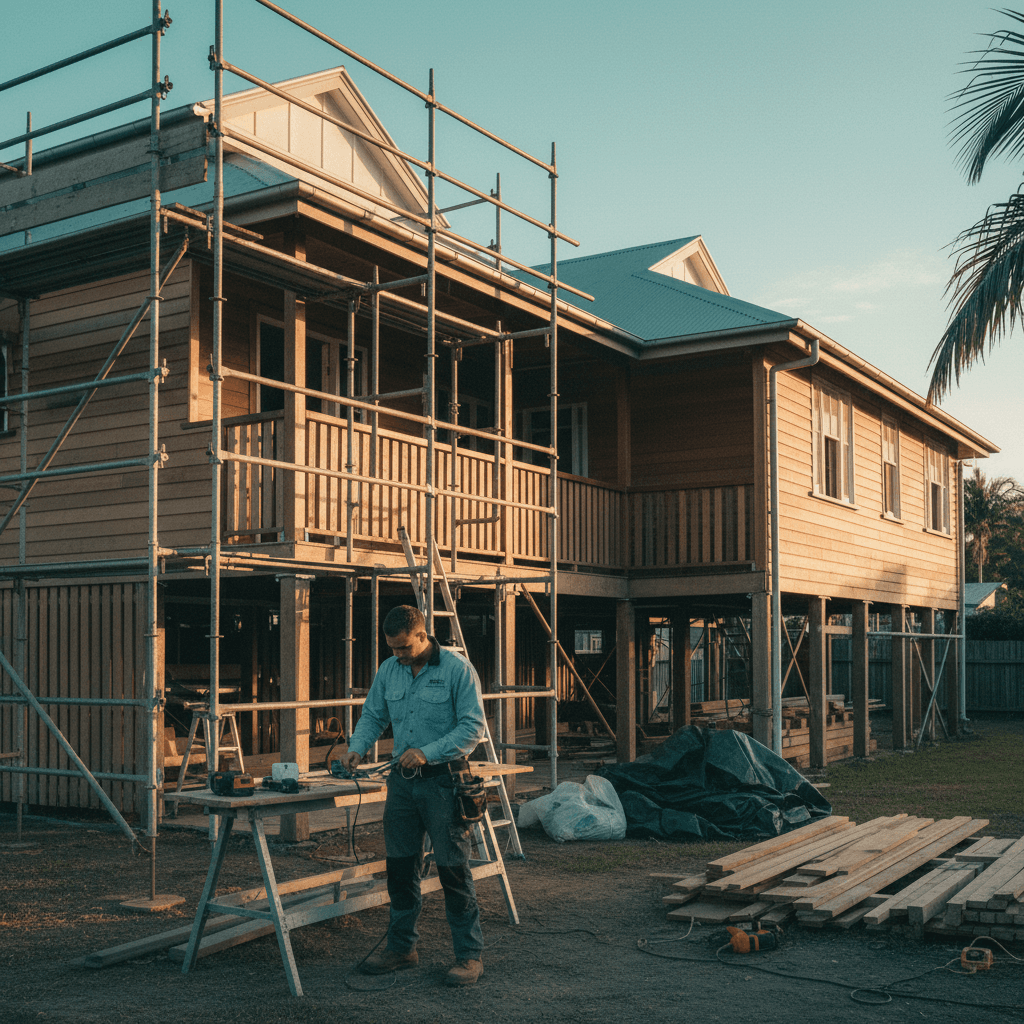
I do six to eight Queenslander renovations a year in inner Brisbane - Bulimba, Norman Park, Camp Hill, Hawthorne, Morningside. Every single one has surprises in the ceiling. None of them are straightforward. And every second one involves me fixing work done by a sparky who clearly hadn't done many Queenslanders before. Here's how to avoid being that client.
Queenslander electrical is its own subset of the trade. The construction methods, the wiring era, the access challenges, and the compliance history of these homes are genuinely different from a brick-veneer 1990s build or a new-build slab home. The sparky who is excellent at switchboard upgrades in Carindale may not be the right person to rewire your 1940s timber home in Norman Park.
Why Queenslanders are electrically different
VIR cabling (Vulcanised India Rubber): pre-1960s Brisbane homes were wired with rubber-insulated cables. The rubber is now 60-80 years old. It has dried, cracked, and in many cases simply disintegrated where it passes over or contacts timber, metal, or other cables. VIR is brittle enough that disturbing it - running new cables near it, pulling through wall cavities - can crack the insulation and create an active fault. Experienced Queenslander sparkies know not to disturb VIR without a plan to replace it.
Ceiling-rose junction wiring: in older Queenslanders, the wiring looped through multiple ceiling roses, which acted as junction points. This creates a wiring topology that is difficult to follow and impossible to extend cleanly without tracing the full circuit. A sparky who just wants to "add a couple of lights" without tracing the circuit first will create a mess.
No MEN (Multiple Earthed Neutral) earthing: pre-1960s homes often have no earthing system, or a partial one. Modern AS/NZS 3000 wiring rules require proper MEN earthing throughout. Any significant electrical work on a Queenslander should trigger a review of the earthing system, not just the circuits being touched.
Lath and plaster walls: not gyprock. Lath and plaster is harder to cut, harder to patch, and the cavities are shallower and more obstructed. Fish work (fishing cable through existing walls) takes longer and requires more skill.
Tongue and groove: external walls and internal dividers in many Queenslanders are tongue-and-groove timber. Running cable behind T&G without damaging it requires experience.
Stump access and underfloor: many Queenslanders have underfloor access via the stumps. This can be a blessing (easy cable runs) or a curse (original wiring entering walls from below, crossing insulation, encountering termite damage or rot in the building structure). A sparky who doesn't know to check the underfloor situation before quoting will either miss things or be back for a second quote mid-job.
Questions to ask before you book
When you ring:
- "How many Queenslander rewires or major renovations have you done in the last 12 months?" Acceptable answers: a specific number (4, 6, 8). Unacceptable: "Oh, plenty" or vague deflection.
- "Have you worked with VIR cabling before, and how do you handle it?" They should know what it is and have a clear approach: leave it unless disturbing it, test it with an insulation resistance tester, replace any runs that fail testing.
- "Do you price Queenslander jobs as a fixed price or time and materials?" Fixed price is preferable. T&M in a Queenslander is an open-ended commitment because surprises are guaranteed.
- "Can you quote to bring the earthing system up to standard as part of the job?" A sparky who doesn't raise this when doing significant work on a pre-1960s home isn't fully across the compliance picture.
- "Do you have experience with ceiling-rose junction wiring?" They should be able to explain how they trace and document it.
- "Do you understand stump and subfloor access in Queenslanders?" Yes/no, and a sentence on why it matters.
Red flags specific to Queenslander work
- Quoting without inspecting the ceiling cavity. Any legitimate Queenslander quote requires a look in the roof and ideally in the sub-floor before a price is given. If they quote on photos alone, be cautious.
- Proposing to "extend the existing circuit" without first testing the existing VIR wiring. This is how old rubber insulation gets disturbed and creates faults.
- Not mentioning earthing. Any sparky doing more than a small repair on a pre-1970s home should be talking about the earthing system.
- No experience with lath and plaster work. This comes up in the finishing: patching plaster properly, not leaving raw cut edges. It's not electrical work, but it's part of the job if you're opening walls.
- Very fast quote times. A quote for rewiring a Queenslander that takes 10 minutes on the phone has not been properly scoped.
What a good Queenslander sparky does
From experience, here's what the best approach looks like:
- Comes to site before quoting, brings a torch and goes in the roof and under the house
- Draws a basic circuit map from what they find in the ceiling and at the board
- Tests VIR insulation resistance before deciding what to leave and what to replace
- Quotes in writing with a clear scope: what circuits are being replaced, what are being extended, what the earthing plan is
- Has a strategy for wall penetrations that minimises damage to T&G and lath
- Coordinates the cable fish work with any other tradies on the renovation so cavities aren't closed before cables are in
- Provides a Form 16 / Certificate of Test for all new work
For adding powerpoints to a Queenslander specifically, see the detail on fish work techniques in that guide.
Cost bands for Queenslander electrical work
Queenslander electrical work costs more than equivalent work on a modern home. The reasons are real: access is harder, the existing wiring is less predictable, and the risk of discovering something that needs fixing mid-job is higher.
Rough 2026 Brisbane cost bands:
- Minor renovation (kitchen or bathroom only, 5-10 circuits): $3,500-$7,000
- Full partial rewire (replace all VIR, retain modern circuits): $8,000-$15,000 depending on home size
- Complete rewire (all new, new board, new earthing, 3-4 bedroom home): $12,000-$22,000
- Switchboard upgrade only, no circuit work: $2,200-$3,800 depending on board size and whether metering is affected
These ranges are honest but wide because scope varies enormously house to house. A 1940s Queenslander with 3 circuits and no earthing is a very different job to a 1970s semi-renovated one with a mix of old and new.
What I've seen in 15+ years of this
The most common mistake I clean up after other sparkies: adding new circuits to a Queenslander by extending old VIR wiring without testing the insulation first. The new circuit works. The old VIR behind it fails 12 months later and there's a fault on a combined old-new circuit that's hard to trace.
The second most common: not addressing the earthing system and signing off new circuits that are "compliant" in isolation but on a board with no proper MEN. This creates a situation where the earthing isn't functioning as designed, and safety switches may not trip as reliably as they should.
The third: underestimating the fish work in T&G walls and not coordinating with the builder. I've seen sparkies leave cables half-run because a wall got lined before they came back. Coordination matters.
I'll do a site visit, a proper look in your ceiling and under the house, and quote you in writing. Ring 0411 054 811.
, John
I'm John, local Camp Hill sparky, fully licensed, fixed-price quotes, lifetime workmanship warranty. Ring me direct on 0411 054 811 or send a quick message.
Keep reading
Adding powerpoints to a Queenslander: how to do it without ruining the floors
Queenslanders look beautiful and were wired terribly. Here's how to add powerpoints to one without lifting every floorboard or chasing every wall.
Renovation electrical checklist for Brisbane homes (the one your builder won't give you)
What to think about *before* the walls go back up. The 12-point electrical checklist for Brisbane renovations, from powerpoint locations to data cabling.