
Is a surge protector worth it for Brisbane homes? An honest answer from a sparky
Brisbane storms fry more home electronics than anywhere else in Australia. Here's when an SPD pays for itself, when it doesn't, and what to actually fit.
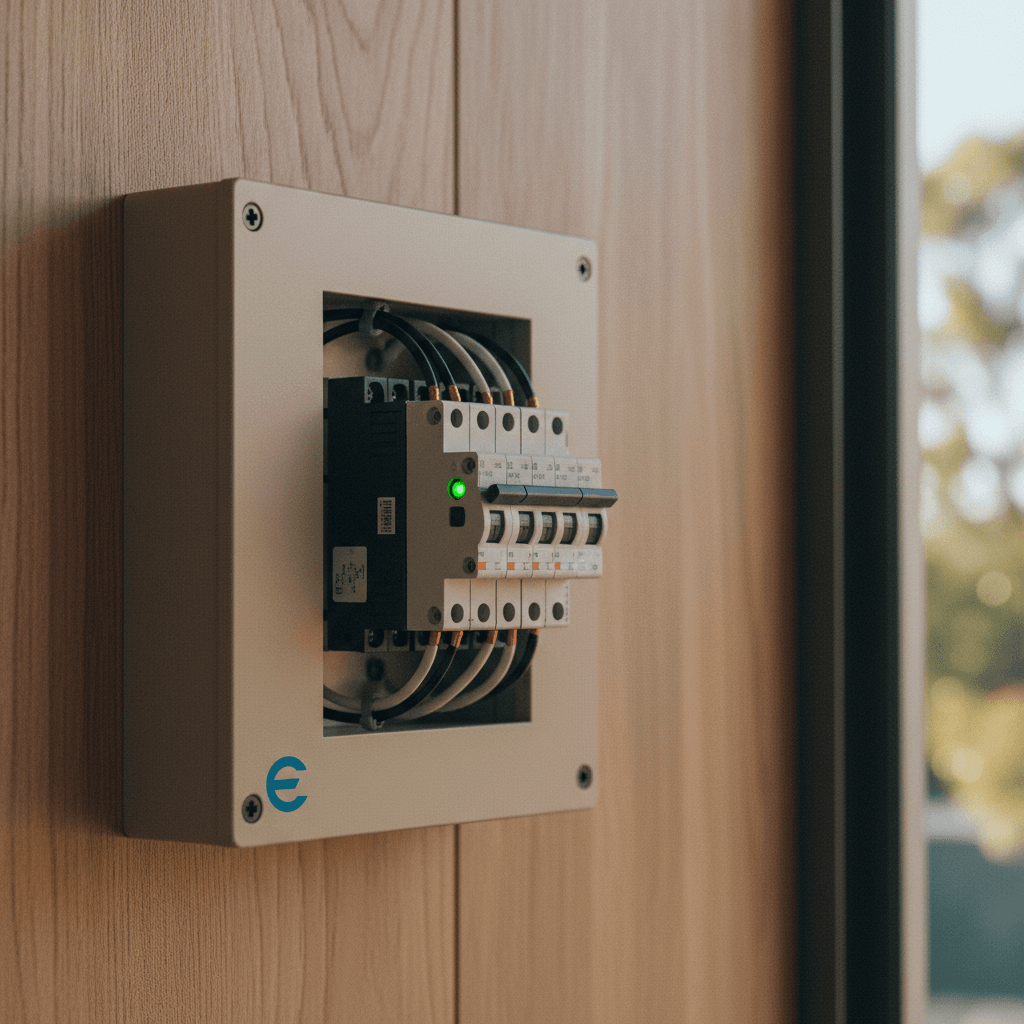
Short answer: yes, fit one. A Type 2 surge protection device at the switchboard is one of the few upgrades I recommend to almost every Brisbane homeowner without hesitation. The cost is $350-$600 installed. The electronics in a modern home, fridge control board, solar inverter, ducted AC unit, smart TV, modem, are worth ten to twenty times that. South-east QLD sits in one of the most lightning-active corridors in the country, and the Energex grid takes voltage spikes every summer that are invisible to your circuit breakers but lethal to silicon chips.
That said, there are limits to what an SPD does, and the cheap power-board versions sold at hardware stores are not the same thing. Here is the breakdown.
How surge protection devices actually work
A surge, also called a transient overvoltage, is a brief spike in voltage that lasts milliseconds or less. The usual causes in SE QLD are lightning striking the distribution network nearby, large motors switching on the grid (industrial air conditioning, lifts, compressors), or Energex switching operations during storm restoration.
Your circuit breakers and RCDs are not designed to catch these. A breaker trips in response to sustained overcurrent. A surge is gone before the breaker even begins to react.
A surge protection device works by housing a component called a metal oxide varistor (MOV). When voltage exceeds a set threshold, the MOV conducts the excess energy to earth rather than letting it flow through to your appliances. It does this in under a nanosecond. The device is then back to normal state, ready for the next event.
There are three types defined in the Australian and New Zealand standard AS/NZS 1768 (Lightning Protection):
- Type 1: Installed between the Energex supply and the main switch. Handles very large direct-strike transients. Mostly commercial, rare in domestic.
- Type 2: Installed at the main switchboard, downstream of the main switch. This is the standard residential fit. Handles surges coming in from the grid.
- Type 3: Point-of-use devices at individual circuits or powerpoints. Lower capacity, supplementary to a Type 2.
For most Brisbane homes, a Type 2 at the switchboard is the right call. If you have genuinely expensive sensitive equipment, a medical device, a high-end audio system, a server rack, adding a Type 3 at that outlet as well makes sense.
What a switchboard SPD costs in Brisbane
Fitted by a licensed sparky, a Type 2 SPD at your main switchboard runs $350-$600 in Brisbane for supply and install. The range depends on the brand and your board configuration. Devices I regularly install include the Hager SPN series and Clipsal units, both of which have a clear visual indicator (green = healthy, red = sacrificed) so you can tell at a glance whether the device has taken a hit and needs replacement.
If you're getting a full switchboard upgrade at the same time, I include the SPD in the quote and the combined cost is lower than doing them separately.
Is it actually worth it? My honest take
In my experience doing switchboard work across Wynnum, Manly, Carina and Carindale, at least half the customers who ring me after a storm have lost something. A solar inverter. A ducted AC control board. A fridge PCB. The repair or replacement cost on any of those sits in the $400-$2,500 range.
The 2024 Christmas storm season in SE QLD was a good example. I had a run of calls in January from homeowners who'd had their solar inverters die after a near-strike event. The damage was not from a direct hit, it was from the voltage disturbance that ran back through the grid. Every one of those homes was unprotected at the board. I also had three customers who'd had SPDs fitted during previous switchboard upgrades. Their inverters were fine. The SPD indicators had gone red, meaning the device had done its job and needed replacement ($180-$250 for the SPD cartridge), but the inverters behind them were unharmed.
That asymmetry is the argument. If you live in SE QLD, you are not in an academic risk scenario. You are in a high lightning-strike frequency zone with an overhead distribution network that conducts every nearby event straight into your meter.
What an SPD won't protect you from
This is important. A Type 2 SPD protects against surges coming in from the Energex network. It does not protect against:
- A direct lightning strike to your home or its immediate wiring. The energy in a direct strike is orders of magnitude beyond what any residential SPD is rated for.
- Surges generated internally by your own appliances (motors cycling, inrush current). These are handled by quality RCBOs and good circuit design, not an SPD.
- Prolonged overvoltage events. An SPD is not a voltage regulator. If Energex delivers sustained high voltage, the SPD will sacrifice itself and then the overvoltage continues.
If a strike does hit your property, the first thing to check is the SPD status indicator before assuming the appliance is gone. A red or black indicator means the SPD has sacrificed, which is good news, the device worked. Replace the SPD cartridge and then check your electronics.
What I fit in Brisbane homes
My standard recommendation for a Brisbane residential install is:
- One Type 2 SPD at the main switchboard, rated to the Australian standard, with a visual indicator and audible alarm (on some models)
- Fitted with a dedicated MCB so the SPD itself is protected and can be isolated for replacement without losing the board
- Brand: Hager, Clipsal or equivalent. I do not fit generic unbranded units; the MOV quality in off-brand devices is inconsistent and they tend to fail silently rather than indicating fault
For homes with solar or battery storage, I also recommend confirming with the solar installer that the inverter has internal surge protection rated appropriately. Some brands include it, some do not.
Power-board surge protectors: the real story
The power boards sold at hardware stores with "surge protection" on the label are not the same as a Type 2 SPD. Most are Type 3 devices at best. They have much lower energy-handling capacity, they do not indicate when the MOV has sacrificed, and there is no standard in Australia that defines what "surge protection" on a retail product actually means.
This does not mean they are useless. A quality power board with a surge rating (look for one with a joule rating on the label, higher is better) provides some supplementary protection for what is plugged into it. Plugging your laptop and modem into one is sensible. It is not a substitute for a switchboard-level SPD.
The two-layer approach is ideal: a Type 2 at the board for the whole house, and Type 3 power boards for the most sensitive individual items.
If you want a Type 2 SPD fitted to your switchboard, or if you want it included in a switchboard upgrade quote, ring me on 0411 054 811 and I can usually give you a price on the phone.
, John
I'm John, local Camp Hill sparky, fully licensed, fixed-price quotes, lifetime workmanship warranty. Ring me direct on 0411 054 811 or send a quick message.
Keep reading
Storm damage and your home's wiring: a SE QLD safety guide
Brisbane storm season is brutal on home wiring. Here's what to check after a storm, and what to never, ever touch.
7 signs your switchboard needs upgrading (and why Brisbane homes are usually first in line)
Trips when the kettle's on. Burnt-plastic smell. Ceramic fuses. The seven signs your old switchboard is on its way out, and what a modern compliant board actually looks like.