
Is it legal to change a light fitting yourself in Australia? (Spoiler: no, here's why)
Even "just a pendant swap" is unlicensed electrical work in QLD. The law, the fines, the insurance fallout, and the safe DIY tasks you can do.
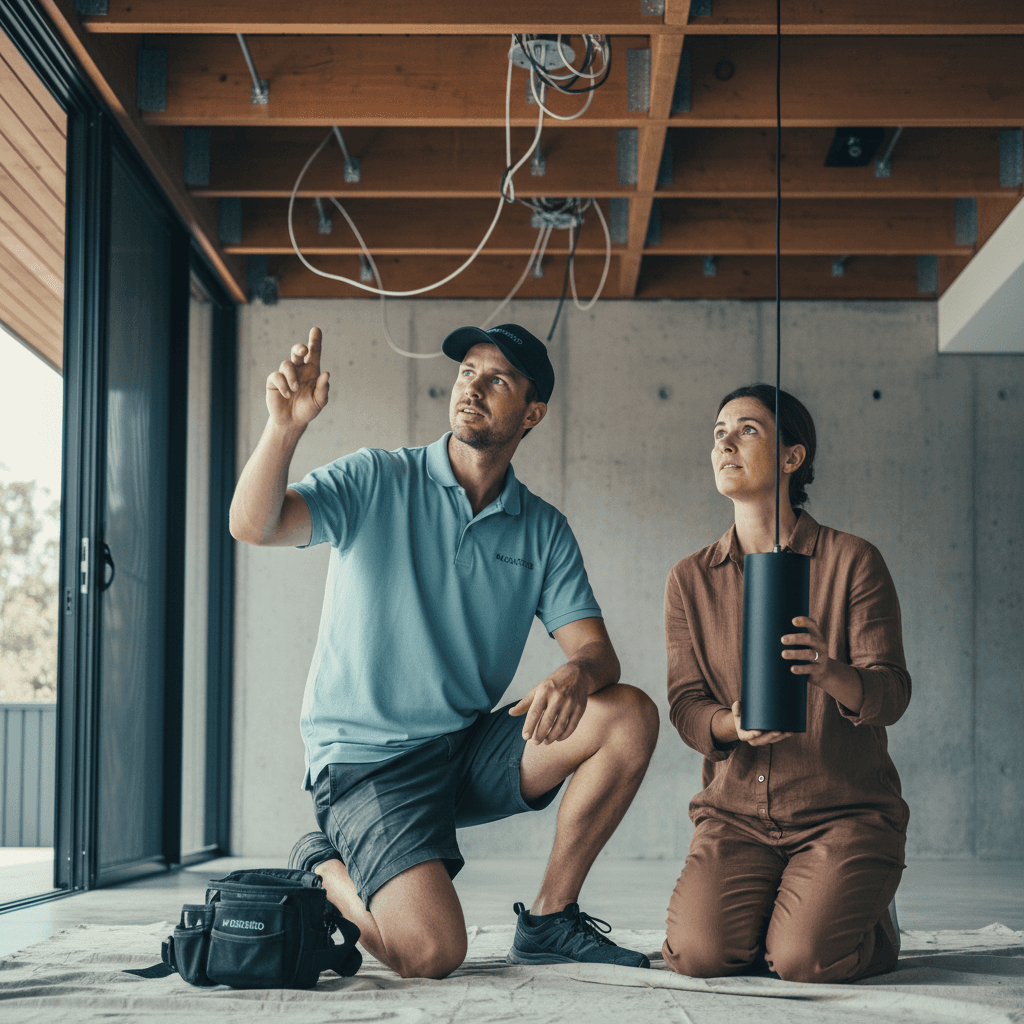
This question comes up regularly. Someone has bought a nice pendant light from a furniture store, the existing ceiling fitting looks simple, there is a YouTube video with 200,000 views showing exactly how to do it, and the new light even comes with a wiring diagram. Surely it is fine to just swap it over?
In QLD, it is not. And the consequences of getting it wrong are more serious than most homeowners expect.
What the law actually says
Under the QLD Electrical Safety Act 2002, electrical work on fixed wiring and electrical equipment must be performed by a person holding a current Queensland electrical licence. There are no exceptions for homeowners doing work on their own property, no "homeowner exemption" that exists in some other Australian states.
"Electrical work" is defined broadly in the Act. It includes installing, altering, repairing, or connecting any electrical equipment that is part of a fixed electrical installation. A ceiling rose and a pendant fitting connected to fixed wiring are part of a fixed electrical installation. Swapping one pendant for another means disconnecting and reconnecting conductors from a fixed installation. That is electrical work.
The fact that the wiring looks simple, that it is only two or three wires, or that the manufacturer has provided a wiring diagram, does not change this. QLD does not have a voltage threshold or a complexity threshold below which the rules do not apply. Fixed wiring work requires a licence.
This is different to some other states. In South Australia and some others, there are licensed owner-builder provisions that allow homeowners more latitude. In QLD, those provisions are narrowly defined and do not include light fitting changes.
What counts as a "light fitting" for legal purposes
Any light fitting that connects directly to fixed wiring at a ceiling rose, a junction box, or a conduit entry point is fixed electrical equipment. This includes:
- Pendant lights and chandeliers.
- Batten holders (the simple round fittings with a bulb socket).
- Downlights (including LED driver and lamp combinations).
- Oyster fittings and surface-mounted ceiling lights.
- Bathroom exhaust fans with integrated lighting.
- Track lighting systems connected to fixed wiring.
- Outdoor wall lights connected to fixed conduit wiring.
What is not included (what you can do yourself):
- Plug-in floor lamps and desk lamps.
- Replacing a bulb or LED lamp in an existing fitting (the lamp, not the fitting).
- Plug-in pendant lights that use a power cord and a standard socket.
The distinction is whether the work involves touching the fixed wiring at the connection point. If it does, it requires a licence.
The fines (they are not small)
The Electrical Safety Act 2002 provides for substantial penalties:
- For an individual performing unlicensed electrical work: up to $40,000 per offence.
- For a corporation directing or engaging unlicensed electrical work: up to $200,000.
- For incidents causing serious injury or death: criminal charges apply under the Act and potentially under the Criminal Code.
These are maximum penalty amounts; in practice, fines for simple first-time homeowner DIY without injury are substantially lower. But the Act does not have a "first offence" exemption, and the Electrical Safety Office does investigate and prosecute.
More practically: the ESO does not need to catch you in the act. If a complaint is made (by a neighbour, by a subsequent occupant, by a building inspector), and DIY work is found, the penalty applies to the work that was done.
The insurance problem nobody mentions
The fine risk is real. The insurance risk is, in most cases, more immediately relevant to homeowners.
Standard home and contents policies in Australia require that all electrical work be performed by a licensed electrician. The exact wording varies by policy, but the intent is consistent: unlicensed electrical work is grounds to void a claim related to that work.
What that means in practice: if you swap a pendant fitting yourself, and three months later that fitting develops a fault that causes a fire, your insurer will investigate. They will find that the work was not performed by a licensed electrician. Depending on the policy and the investigator, they can and do decline to pay the structural claim. In a serious house fire, that is the difference between a full rebuild and a personal financial catastrophe.
This is not a theoretical risk. I have seen it happen in Brisbane. I was called in to provide a report on a fire at a Camp Hill property. The cause was a loose connection at a ceiling rose. The homeowner had changed the pendant 18 months earlier. The insurer declined the structural claim.
What you can legally do yourself
To be useful rather than just depressing about the law, here is what you genuinely can do as a homeowner in QLD without a licence:
- Change a light bulb or LED lamp in an existing fitting.
- Install a plug-in lamp (floor lamp, desk lamp) anywhere there is a socket.
- Replace batteries in battery-powered smoke alarms or emergency lights.
- Reset a tripped circuit breaker or RCD at the switchboard.
- Press the T test button on a safety switch.
- Replace a plug on the end of a flexible cord (like a kettle cord or an extension lead), if you have the right tools and know what you are doing.
Painting a light switch? Legal. Cleaning a light fitting that is not connected to anything? Legal. Touching the wiring? Not legal.
What a sparky charges for a pendant swap
Here is the practical answer to why most people consider DIYing this: they expect it to cost a fortune, and it does not.
A straightforward pendant swap at an existing ceiling rose in Brisbane in 2026:
- Single pendant at a standard ceiling rose: $110-$165 including the certificate, usually completed in 20-30 minutes.
- If the existing ceiling rose needs replacing (common in older Camp Hill and Norman Park homes): add $40-$60.
- Multiple pendants in one visit: cost per fitting drops as travel time is shared.
If you have three or four fittings you want to swap, book one visit and do them all. The per-fitting cost drops, you get one certificate covering all the work, and you do not have the fine risk or the insurance exposure hanging over you.
See our guide to LED downlight upgrades if you are also thinking about converting your halogen downlights while you are at it. It is genuinely cost-effective to do both in a single visit.
Ring 0411 054 811 for pendant swaps, downlight conversions, or any other fitting changes across Camp Hill, Carina, Norman Park and surrounding suburbs. We carry standard ceiling roses and fittings in the van, so most jobs are same-visit even if the existing fitting needs work.
, John
I'm John, local Camp Hill sparky, fully licensed, fixed-price quotes, lifetime workmanship warranty. Ring me direct on 0411 054 811 or send a quick message.
Keep reading
DIY electrical work in QLD: what's legal, what's not, and what'll get you fined
QLD has some of Australia's strictest electrical-DIY laws. Here's what you can do as a homeowner, what you can't, and the actual penalties.
LED downlight upgrade guide: what to actually buy, and what it costs in Brisbane
What I install on every LED downlight upgrade in Brisbane, including the brands worth paying for, the dimmable trick most installers get wrong, and real prices.