
Landlord electrical responsibilities in QLD: the actual list you're legally on the hook for
Smoke alarms, safety switches, periodic checks: what QLD law and the lease actually require of landlords in 2026, with cost estimates.
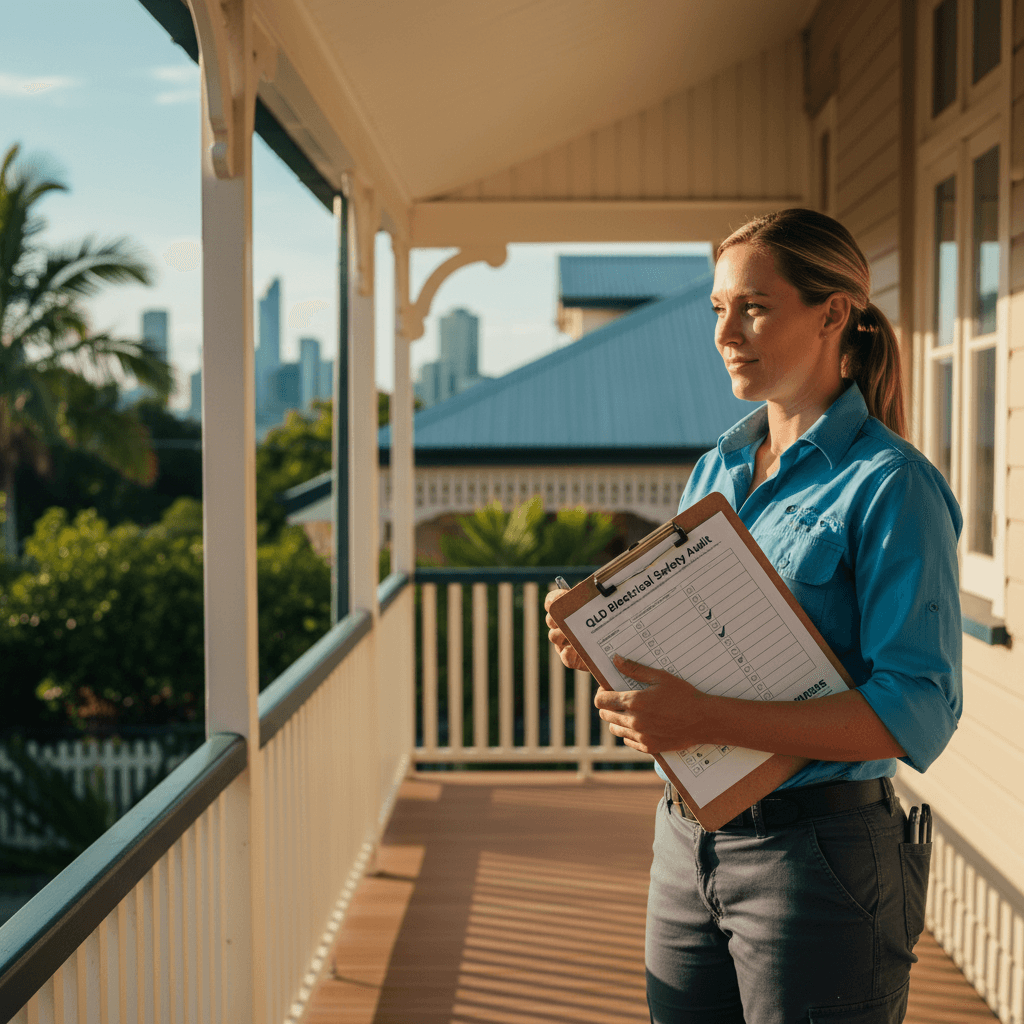
I do a lot of work for landlords and property managers in suburbs like Coorparoo, Greenslopes and Stones Corner. Most of them are well-meaning people who genuinely do not know what the law requires of them. Some have been managing properties for years on the assumption that the rules are the same as they were in 2010.
They are not. Here is the actual list.
Smoke alarms: the mandatory requirements
QLD has had a staged smoke alarm compliance rollout since 2017. For landlords, the date that mattered was 1 January 2022, from which point every property being leased or re-leased must have:
- Photoelectric smoke alarms (not ionisation).
- Interconnected (if one triggers, all trigger).
- Hard-wired to mains power, with a 10-year sealed lithium battery backup. Alternatively, a 10-year non-removable lithium-only alarm is compliant where hard-wiring is impractical.
- In every bedroom.
- In every hallway that connects a bedroom to the rest of the house.
- On every additional storey of the dwelling.
The alarms must comply with AS 3786:2014. That rules out older ionisation alarms, cheap battery-only alarms, and most of the pre-2017 stock that is still on ceilings in Brisbane investment properties.
Practically: if you are signing a new tenancy agreement or renewing a lease in 2026, the property must already have compliant alarms before that tenancy begins. The agent cannot proceed with the lease without a compliance certificate. Property managers in the inner south, Greenslopes and Coorparoo in particular, are increasingly asking for this certificate as a pre-listing requirement.
From 1 January 2027, every domestic dwelling in QLD must comply regardless of tenancy status. If you own a rental property and have not yet upgraded, you are inside 12 months of that deadline.
Safety switches: what the law actually says
Under the Electrical Safety Act 2002 (QLD) and the Electrical Safety Regulation 2013, a rental property must have functioning safety switches (RCDs) on power circuits and lighting circuits. This requirement has applied to new rentals since 2002, and to all rentals from 1 January 2003.
What that means in practice:
- There must be at least one RCD covering power circuits and at least one covering lighting circuits.
- The current standard is an RCBO on every circuit individually. This is what AS/NZS 3000 specifies for new work, and it is what we fit on every upgrade.
- The RCDs must be functional. A landlord whose RCD fails to trip on the test button, and who has not had it replaced, is not compliant.
Property managers should be testing or arranging for testing of RCDs at every change of tenancy. Voltech does these inspections starting at $190 and provides a written test record on the day.
One common trap: a landlord buys an older investment property with an original 1980s switchboard that has one shared RCD on the power circuits and no RCD on lighting. This is non-compliant. The practical fix is a switchboard upgrade, which also typically gives you the space to run additional circuits for AC, hot water, and other dedicated loads. Cost for a typical 3-bedroom Coorparoo unit: $1,750-$2,400.
General electrical maintenance during a tenancy
Landlords in QLD have a general duty under tenancy legislation to maintain the property in a condition fit for habitation. For electrical systems, this means:
- Responding promptly to reports of faulty outlets, failing switches, or RCDs that trip repeatedly.
- Not requiring tenants to live with known electrical faults.
- Engaging a licensed electrician for any rectification work (not a handyman, not the builder next door).
What it does not mean: landlords are not required to upgrade the entire electrical system every few years, or to bring pre-existing work up to the current version of AS/NZS 3000 on an ongoing basis. The duty is to keep what is there working safely, and to repair faults promptly.
Where landlords get into trouble is when a tenant reports a fault in writing, the landlord delays dealing with it, and something goes wrong. The written notice changes the legal position significantly. If a tenant emails about a sparking powerpoint and the landlord does not engage a sparky within a reasonable timeframe, and that powerpoint later causes a fire, the landlord has a very difficult position.
My advice: treat written fault reports as same-week jobs, not end-of-quarter.
What to do at the start of each new tenancy
At the start of each new tenancy (including renewals, where the law was changed), the landlord or their agent should ensure:
- Smoke alarm compliance certificate is current. This is the written record that alarms are photoelectric, interconnected, hardwired, in the right locations, and within their 10-year service life.
- RCD test on all safety switches. Document the result. If any fail, replace before handover.
- Visual inspection of the switchboard. If the board has ceramic fuses, no RCDs, visible corrosion, or is not labelled, those issues need addressing.
- Entry condition report documents the state of all outlets, light fittings and switches. This protects both landlord and tenant.
My practical landlord checklist
When a property manager asks Voltech to do a pre-tenancy electrical check, here is what we cover:
- Smoke alarm type, location, age and interconnection test.
- Test every RCD using the T button and record the result.
- Visual inspection of switchboard: enclosure condition, labels, signs of overheating.
- Spot-check of 4-6 outlet circuits using a socket tester: correct polarity, earth continuity, no open circuits.
- Visual check of light switches and fittings for loose covers, damaged faceplates, flickering.
- Check of any outdoor outlets, pool equipment circuits, and carport/garage power.
- Written report with photos, emailed same-day.
This takes 60-90 minutes for a typical 3-bedroom property. We provide a report that property managers can file with the entry condition report and that meets the documentation standard for the smoke alarm requirements.
Cost estimates for compliance
Realistic numbers for 2026 Brisbane:
- Pre-tenancy electrical inspection and report: $220-$330.
- Smoke alarm installation (photoelectric, interconnected, hardwired), per alarm: $220. Typical 3-bed home: $1,100 total.
- Switchboard upgrade (existing non-compliant board to full RCBO coverage): $1,650-$2,400 for a typical 3-bed home.
- Single RCBO replacement (swap one failing safety switch): $220-$280 fitted.
- Urgent fault call-out (report from tenant, same-day response): $165 call-out plus parts.
If you are managing multiple properties, we offer a block booking rate and a consistent documentation format across all properties. Ring 0411 054 811 or email through a property list and we will work out a schedule.
Getting this right costs less than one week's rent on most inner-Brisbane properties. Getting it wrong, in QCAT disputes, in insurance complications, or in a serious incident, costs substantially more.
, John
I'm John, local Camp Hill sparky, fully licensed, fixed-price quotes, lifetime workmanship warranty. Ring me direct on 0411 054 811 or send a quick message.
Keep reading
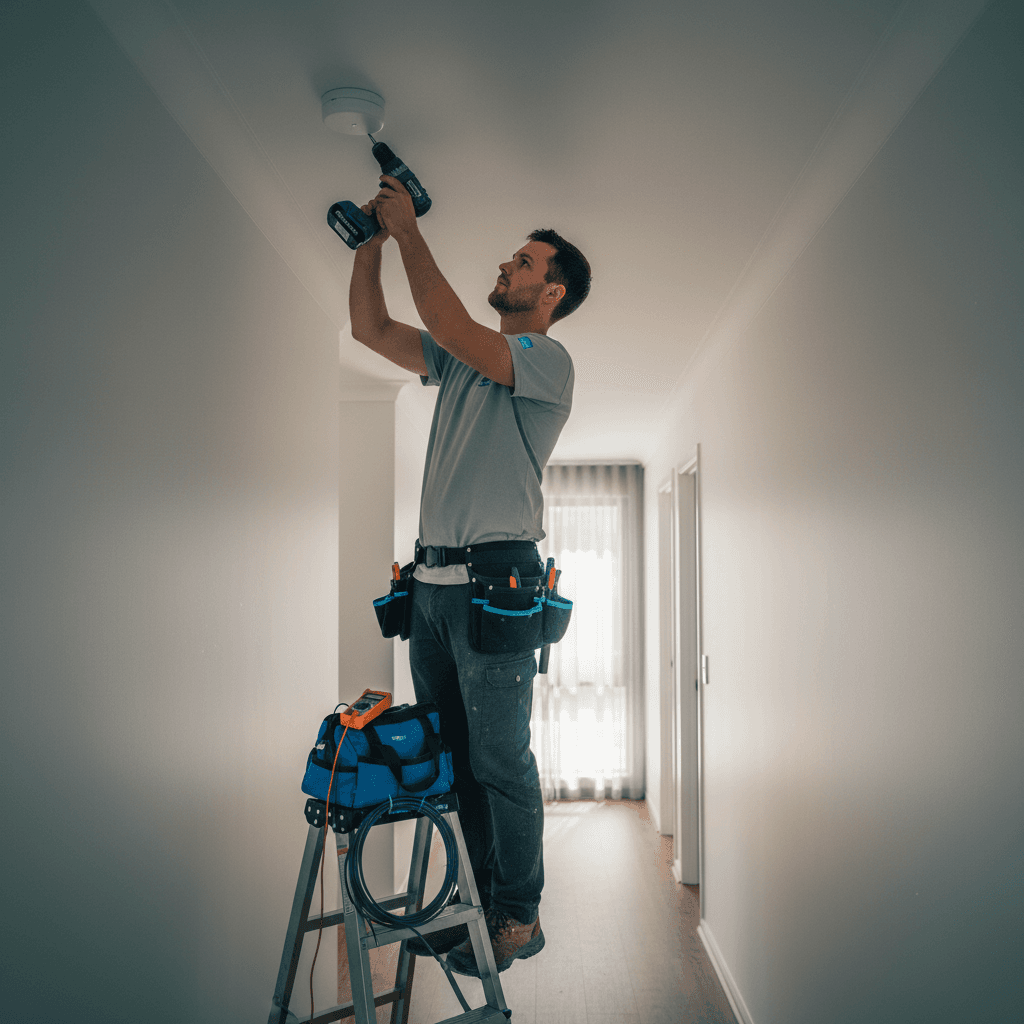
QLD smoke alarm laws 2027: the simple version (and what it'll cost)
From 1 January 2027, every QLD home needs interconnected, photoelectric, hard-wired smoke alarms. Here's exactly what you need, where, and what it should cost.
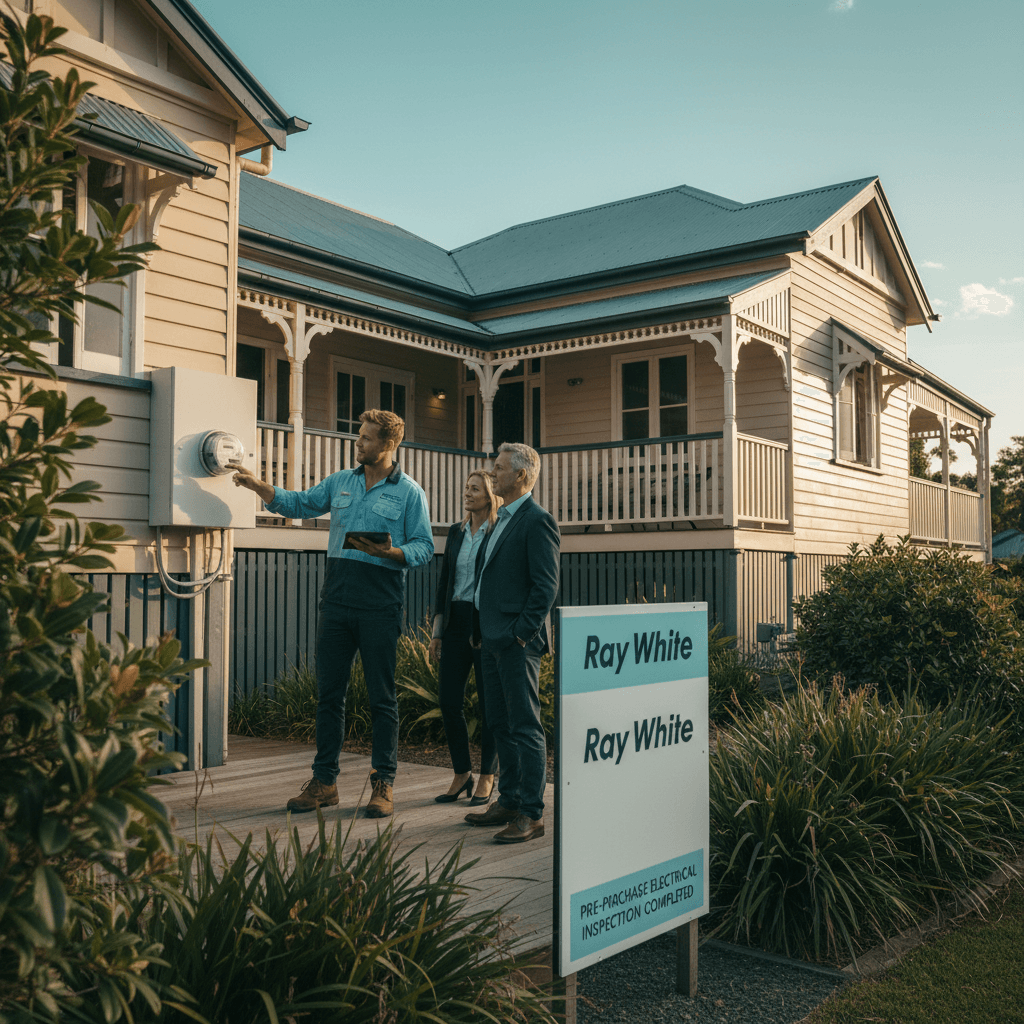
Selling or renting your QLD home? The smoke alarm checklist nobody warned you about
If you're selling or leasing a QLD home in 2026, you must have compliant smoke alarms or the sale / lease can't proceed. Here's the checklist.