
Kitchen renovation electrical checklist for Brisbane (the one your kitchen designer forgot)
Cooktop circuits, oven circuits, dishwasher, microwave, fridge, range hood, USB, lighting layers: the proper electrical scope for a Brisbane kitchen reno.
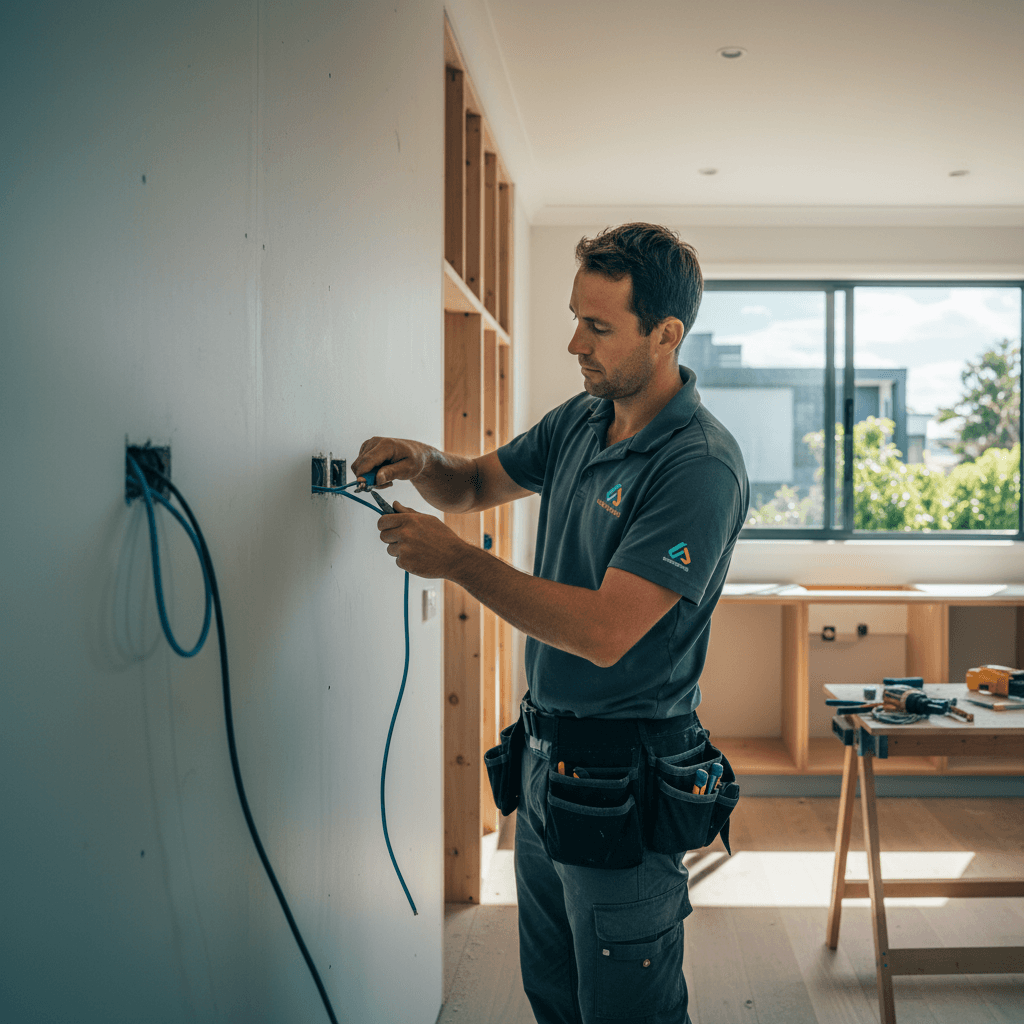
Kitchen renovations are the most electrically complex room in the house. A bathroom has zones and IP ratings. A kitchen has zones, IP ratings, dedicated circuits, high-load appliances, USB, data, and three separate lighting layers, all crammed into the space your designer has packed with cabinetry. I get called in to fix kitchen electrical scopes regularly after the kitchen designer has planned the room without an electrician in the room. Here's what a complete kitchen electrical scope looks like for a Brisbane home in 2026.
Dedicated circuits for heavy appliances
The most important thing to understand about a kitchen renovation is that several appliances must have their own dedicated circuit from the switchboard. They cannot share circuits with each other or with general-purpose powerpoints.
Oven or wall oven: Dedicated 32-amp circuit on 6mm² cable. Even a modest 600mm electric oven pulls 7-10kW at full load. This cannot share with anything.
Induction cooktop: Dedicated 32-amp circuit on 6mm² cable. A 90cm induction cooktop can pull 7.2kW with all zones on high. Gas cooktop with electric ignition is a much lower load, but still benefits from its own circuit.
Dishwasher: Dedicated 20-amp circuit. Dishwashers cycle their heating element on and off throughout the wash. Sharing a circuit with a fridge or other appliance creates nuisance trips.
Microwave (if rangehood combo or built-in): Dedicated 20-amp circuit, especially for combination microwave-oven units which pull 2-3kW.
Range hood (if separate from microwave): Can often share with the microwave or be on its own 10-amp circuit, depending on the model and design.
Refrigerator/freezer: While technically a relatively low-load appliance, fridges are on 24/7 and their compressor starting current is disproportionately high. A dedicated 20-amp circuit is best practice, though a shared power circuit that doesn't include other high-draw appliances is acceptable.
Under-counter appliances: Wine fridges, underbench fridges, and built-in appliances can share a general power circuit but should be on their own outlet, not daisy-chained.
Total for a typical full-size kitchen: 4-6 dedicated circuits to the switchboard. This often means the switchboard needs assessment before you start: can it take the extra circuits?
Powerpoints: how many, where
The minimum I recommend for a kitchen renovation in a Bulimba or Norman Park home:
- Above the bench, one double GPO per 600mm of benchtop is the minimum. In practice, design for a double at each major appliance zone: kettle/toaster station, breakfast bar, coffee machine, food processor.
- USB-C combination outlets at the breakfast bar and near where phones get left. Get the USB-C type, not USB-A. Everything in 2026 charges on USB-C.
- Fridge alcove: A single outlet behind the fridge position. Concealed, on a dedicated circuit or at minimum its own outlet.
- Dishwasher recess: A single outlet under the bench in the dishwasher recess. This needs to be accessible (you need to be able to isolate the dishwasher without pulling the machine out).
- Island bench: If there's an island, a minimum of 2 doubles on the island, flush-mounted in the bench top or side-mounted. Flush pop-up outlets exist but require specific joinery for the knockout, so get the electrician and the cabinetmaker talking early.
- Above the rangehood: One outlet above the rangehood for the rangehood's own power supply, plus one for the microwave if it's in the same cabinet.
Heights matter. All above-bench outlets should be at the same height above the benchtop, typically 150-200mm above the finished bench surface, agreed with the cabinetmaker before the joinery is installed. Getting this wrong means cabinetry has to be modified.
Lighting layers in a kitchen
A single central downlight is not a kitchen lighting plan. A proper Brisbane kitchen in 2026 has three layers:
Ambient (general illumination): LED downlights in the ceiling, usually on a separate circuit from the task lighting so they can be dimmed independently. Position downlights to light the centre of the room and the aisle areas, not directly above the benchtops (that puts you in your own shadow when working).
Task (benchtop illumination): Under-cabinet LED strip lights illuminate the benchtop directly from above. This is the light you cook by. Hard-wired LED strip (not plug-in) under every upper cabinet run. The driver (transformer) for the strip goes in the cabinet above or in the kickboard, and the switching can be via a separate switch or linked to the ambient circuit.
Feature/pendant: Pendants over an island bench or breakfast bar give the kitchen visual character and provide additional downward light. These need their own circuit (or sub-circuit) so they can be on a separate switch or dimmer from the main downlights.
Dimmers are standard now on ambient circuits. Specify LED-compatible dimmers (trailing edge, not leading edge) for LED downlights, and verify the downlight and dimmer are compatible before specifying.
See the LED downlight guide for more on downlight selection.
Switching and smart controls
In a standard kitchen, you'll have:
- Main downlight switch (usually near the kitchen entry).
- Under-cabinet task light switch (usually near the cooking area or bench end).
- Pendant switch over island (often combined with main downlights or separate if on a dimmer).
- Rangehood control (usually on the hood itself, not a wall switch).
Smart switching options for Brisbane kitchens in 2026:
- Clipsal Iconic Wiser or HPM Excel Wifi smart switches integrate with Apple HomeKit, Google Home, or Home Assistant. They replace the standard switch plate; wiring is standard.
- Scene-based control: one tap sets kitchen to "cooking mode" (all lights on full), another sets "dinner mode" (pendants on, downlights dimmed).
- App or voice control for pendant lights over an island is a common request in Norman Park and Camp Hill renovations.
The switching layout should be agreed with the sparky before the cabinetmaker finalises the kickboard and upper cabinet runs, because switching positions affect cable routing.
Data and USB in the kitchen
Beyond USB outlets (covered above), kitchens increasingly need:
- One Cat6 data point on the bench-level wall or island for a tablet or TV mounted on the splashback.
- One Cat6 to the rangehood position if you're mounting a screen or smart display above the cooktop (it's a thing).
- Power in the pantry for appliance storage (if the pantry is large enough to have its own small appliance charging area).
Wireless is convenient but for a kitchen TV or a smart display over the cooktop, a hardwired ethernet connection is noticeably more reliable.
Compliance requirements
The compliance requirements specific to kitchen electrical work:
- All above-bench circuits must have RCD protection. This is mandatory under the wiring rules for kitchen circuits.
- The dishwasher outlet must be accessible for isolation (you should be able to switch it off without pulling the machine out).
- Electrical work in wet areas of the kitchen (near the sink, within splash zones) must use IP-rated fittings. A standard powerpoint cannot be installed within the zone directly above the sink.
- Any new switchboard circuits require a Certificate of Test on completion.
- Smoke alarms: if the kitchen is within the smoke alarm zone map, ensure the alarm positions are agreed with the builder before the reno starts. You don't want to find the planned downlight location is where the smoke alarm must go.
Kitchen renovations are one of the best times to deal with old or undersized wiring in the rest of the house, because the walls are already open. If you're doing a kitchen renovation in Bulimba, Norman Park, or Camp Hill, ring 0411 054 811 and I'll walk through the full electrical scope with you before the cabinetmaker locks anything in.
, John
I'm John, local Camp Hill sparky, fully licensed, fixed-price quotes, lifetime workmanship warranty. Ring me direct on 0411 054 811 or send a quick message.
Keep reading
Renovation electrical checklist for Brisbane homes (the one your builder won't give you)
What to think about *before* the walls go back up. The 12-point electrical checklist for Brisbane renovations, from powerpoint locations to data cabling.
LED downlight upgrade guide: what to actually buy, and what it costs in Brisbane
What I install on every LED downlight upgrade in Brisbane, including the brands worth paying for, the dimmable trick most installers get wrong, and real prices.