
How to tell if your electrician is actually licensed in QLD (and what to do if they're not)
Free 30-second public licence lookup, the actual licence types, and the steps if you suspect your sparky isn't licensed.
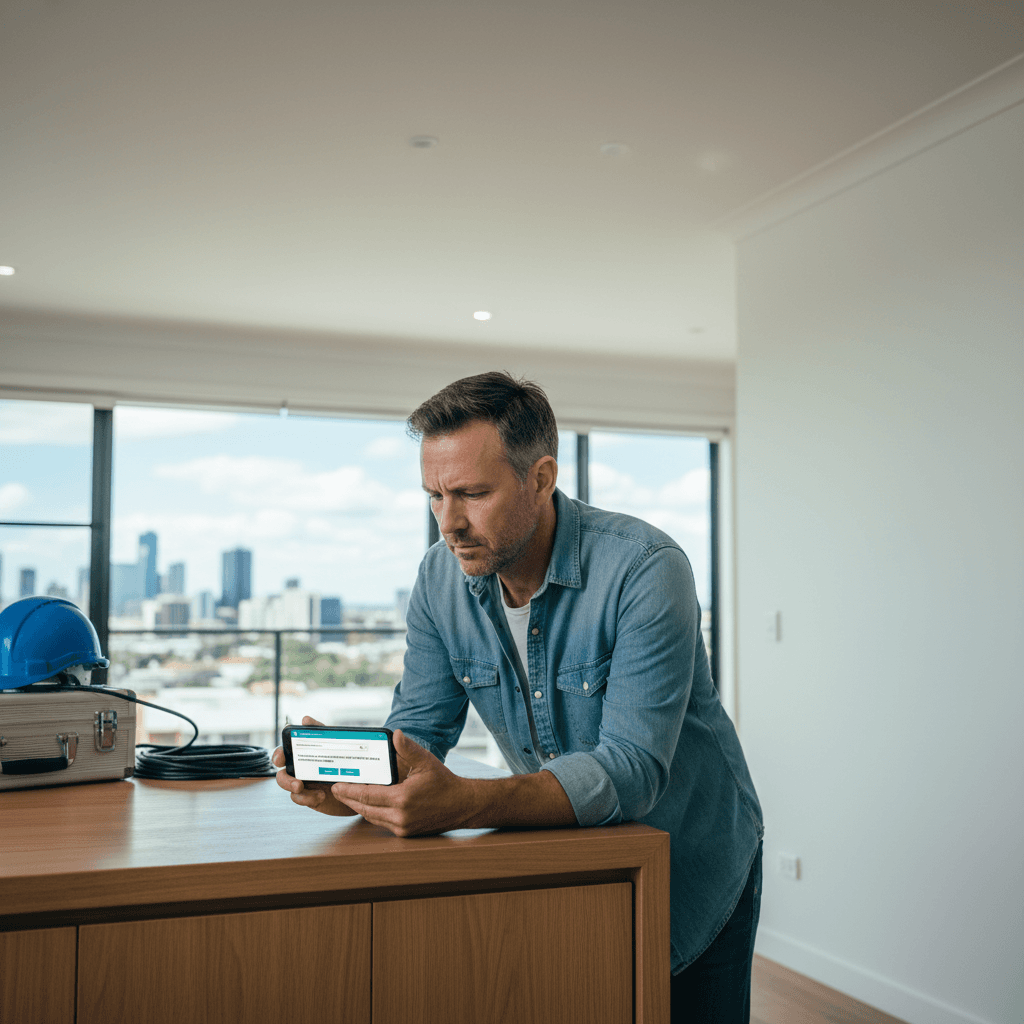
Every few months I hear from a homeowner who paid someone to do electrical work, something went wrong, and they've since discovered the person wasn't actually licensed. By that point the options are unpleasant: report to the Electrical Safety Office, potentially get the work ripped out, and try to recover money from someone who may not have it. The check that prevents this takes 30 seconds and costs nothing.
Here is exactly how to verify a QLD electrician's licence, what the licence types mean, and what to do if you find out the work wasn't done by someone on the register.
Why licensing matters beyond just the fine
The obvious answer is the Electrical Safety Act 2002 (QLD). Performing electrical work without a licence is an offence. The personal fine for an unlicensed individual can run to tens of thousands of dollars. The company fine can be significantly higher. But the fines are the regulator's problem, not yours directly.
What matters to you as a homeowner:
Safety: licensed electricians have demonstrated competency. They understand the wiring rules (AS/NZS 3000), the earthing requirements, the RCD requirements, and how to test their work before leaving. An unlicensed person doing electrical work may not know what they don't know, which is the most dangerous state to be in.
Certification: completed electrical work must be certified with a Form 16 (Certificate of Test) under QLD law. An unlicensed person cannot issue a Form 16. Without one, the work is legally uncertified, which becomes your problem at selling time.
Insurance: this is the one that stings. If unlicensed electrical work causes a fire or damage, your home and contents insurer can decline the claim. They will check the certification status of relevant electrical work as part of their investigation. Unlicensed work with no Form 16 gives them grounds to deny.
Sale and lease: when you sell or lease a property in QLD, the buyer's or tenant's solicitor or the real estate agent may ask about the certification of recent electrical work. Uncertified work can delay settlement or require rectification before the contract proceeds.
The free 30-second public licence lookup
The Electrical Safety Office (ESO) - the regulator under Work Health and Safety Queensland - maintains a public register of licensed electrical workers and electrical contractors in Queensland.
Go to worksafe.qld.gov.au and search for "electrical licence check" or navigate to the online licence search tool. Enter the person's name or their licence number. The result tells you:
- Whether the licence exists
- The licence type (electrical contractor vs electrical worker)
- The licence status (current, expired, suspended, cancelled)
- The expiry date
You can do this before booking. You can do it while the sparky is at your house. You can do it after they've left. The register is public, free, and updated by the ESO.
A legitimate sparky will have no problem with you checking. They will often offer the licence number voluntarily. A sparky who gets defensive when you ask for their licence number is giving you information.
QLD electrical licence types explained
There are two distinct licence types in QLD:
Electrical Contractor Licence (ECL): issued to the business entity (company or sole trader) that provides electrical services for payment. This is what you're hiring when you book an electrical business. The contractor is responsible for the quality of work done under their licence.
Electrical Worker Licence (EWL): issued to the individual sparky. This is the person turning up at your house with tools. An electrical worker must hold a current EWL and must work under an electrical contractor's licence.
A sole trader who owns their own business will hold both: an ECL (for the business) and an EWL (for themselves as the worker). A sparky working for a company will hold an EWL; the company holds the ECL.
Both should be verifiable on the ESO register.
Licence classes: within the EWL, there are different classes of work a sparky is authorised to perform. A fully licensed electrician (the standard you want for domestic work) can work on any domestic installation. There are also restricted licence classes for limited scope work. For general residential electrical, you want an unrestricted electrical worker licence.
Apprentices: an apprentice does not hold an EWL. They work under supervision of a licensed electrician. It is legal for an apprentice to perform electrical work if supervised in accordance with the rules. If an apprentice is on your job alone with no licensed sparky on site, that is potentially a compliance issue.
What to do if you suspect unlicensed work
If you believe electrical work at your property was done by an unlicensed person:
- Do not use the affected circuits until you have a licensed electrician inspect and certify the work, or if necessary, redo it.
- Gather evidence: invoices, text messages, bank transfers, photos of the work.
- Report to the ESO: the Electrical Safety Office investigates complaints about unlicensed electrical work. They can be contacted through the Work Health and Safety Queensland website. Complaints can be lodged online.
- Get a licensed sparky to inspect: you will need a licensed electrician to inspect the work, test it, identify any defects, and either certify it (if it meets standard) or document what needs rectification. They will provide a written report which your solicitor and insurer can use.
- Insurer notification: notify your insurer of the situation. Some insurers want early notification of potential issues rather than discovering it at claim time.
The ESO takes unlicensed work seriously. Investigations can result in prosecution, significant fines, and orders to rectify work at the unlicensed person's expense. Your report contributes to that outcome.
If the unlicensed work was done by a contractor who represented themselves as licensed, you may also have grounds for a civil claim for the cost of rectification.
How unlicensed work affects your home insurance
Standard home and contents policies in Australia include conditions that broadly require the insured to maintain the property in accordance with applicable laws and regulations. Unlicensed electrical work is a breach of those conditions.
In practice, insurers investigate the cause of fire claims. Their investigators are familiar with Australian electrical certification requirements. If they find uncertified electrical work at or near the source of a fire, they will look at whether that work contributed to the loss. If it did, and the work was unlicensed, the claim can be declined.
Some policies go further and exclude any loss arising from work that should have been done by a licensed contractor but was not. Check your Product Disclosure Statement for the specific wording.
The practical upshot: a $300 electrical job done by an unlicensed person can put your $800,000 home at risk in a fire scenario. It is not a corner worth cutting.
Voltech's licensing details
For full transparency:
- Voltech Power Solutions holds a current QLD Electrical Contractor Licence.
- John holds a current QLD Electrical Worker Licence (unrestricted).
- Both licences are searchable on the ESO register at worksafe.qld.gov.au.
- Every completed job receives a Form 16 / Certificate of Test emailed to the client before we leave the property.
- I will email you a copy of the licence on request, before the job, no hesitation.
See the guide to hiring a local sparky for the full list of questions to ask before you book anyone.
Ring 0411 054 811 to verify our credentials or book a job.
, John
I'm John, local Camp Hill sparky, fully licensed, fixed-price quotes, lifetime workmanship warranty. Ring me direct on 0411 054 811 or send a quick message.
Keep reading
Hiring a local electrician in Camp Hill: what to ask before you book
The 9-question filter for hiring a local sparky in Camp Hill or anywhere in south-east Brisbane. Avoids the most common bad hires.
DIY electrical work in QLD: what's legal, what's not, and what'll get you fined
QLD has some of Australia's strictest electrical-DIY laws. Here's what you can do as a homeowner, what you can't, and the actual penalties.