
Heat pump hot water electrical requirements (Brisbane install guide)
Switching from gas or storage to a heat pump? The circuit, the isolator, the controlled-load tariff, and the rebates that pay for the install.
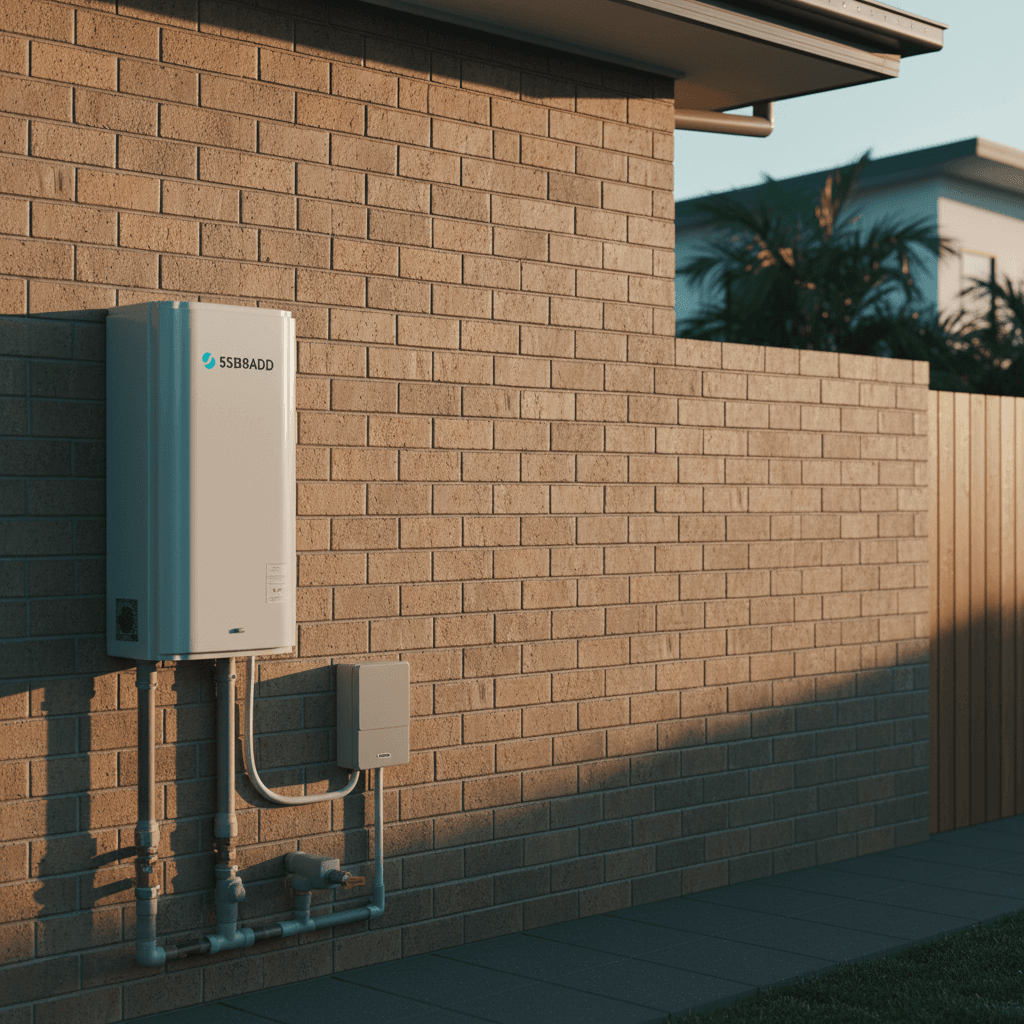
Heat pump hot water systems are the most efficient way to heat water in a Brisbane home. They move heat from the surrounding air into the water, rather than generating heat directly, which makes them 3-4 times more efficient than a resistive electric storage system. The electrical requirements are simpler than most people expect, and in many cases the existing wiring from your old storage hot water unit carries straight over with minor modifications.
I install heat pumps across Camp Hill, Carindale, and Wakerley regularly. Here's what you need to know about the electrical side before you buy the unit.
How much power a heat pump actually uses
This surprises most people. A typical residential heat pump hot water unit, from brands like Sanden, Reclaim Energy, or iStore, draws between 1.0 and 3.0 kilowatts at the compressor. That's far less than the 3.6kW to 4.8kW that a standard electric storage hot water element pulls.
The heat pump achieves this by using a refrigerant cycle: it extracts heat from the ambient air (which is essentially free energy in Brisbane's climate) and concentrates it into the water tank. The compressor that drives this cycle is the main electrical load.
The implication: a heat pump hot water system on a 10-15A single-phase circuit is sufficient for most residential units. Some larger systems (250-315 litre) may draw towards the top of that range; check the unit's specification plate.
Compare this to a resistive element: a 3.6kW electric storage element needs a 20A circuit at minimum. A heat pump running at 1.5kW on the same circuit has significant headroom.
The circuit requirements
For most residential heat pump units in Brisbane:
- Single-phase 240V supply, standard for all residential heat pumps available in 2026. No three-phase required.
- 10A to 20A circuit depending on the unit. Check the manufacturer's specification sheet for the maximum current draw and the recommended circuit breaker rating. Most standard units are happy on a 15A or 20A circuit.
- Cable sizing: typically 2.5mm² TPS for a 20A circuit, subject to cable run length and derating if the cable passes through insulation or is bundled with other cables.
- RCD protection: mandatory. The hot water circuit must have a 30mA RCD upstream.
If you're replacing an old electric storage system, the existing circuit may carry straight over, provided:
- The cable is in good condition and the correct size for the new unit's load.
- The circuit breaker rating matches the new unit's requirements.
- There is RCD protection on the circuit (older hot water circuits often don't have RCDs; this needs to be added).
If you're converting from gas hot water (which has no existing electrical circuit), a new circuit from the switchboard is needed.
The isolator
A heat pump hot water unit requires a weatherproof isolating switch (main switch) mounted adjacent to the unit and within sight of it. This allows the unit to be isolated for servicing without going to the switchboard.
The isolator must be:
- Double-pole (isolates both active and neutral).
- Appropriately rated for the load (minimum rating equal to the circuit breaker in the switchboard).
- IP56 weatherproof rated if it's in an exposed outdoor location, which it almost always is for a heat pump.
Some installers skip the isolator or use an undersized or non-weatherproof unit. That's a compliance failure. The isolator is not optional.
The isolator is mounted by the electrician during the installation; it's part of the electrical scope, not the plumber's scope. On a split-system heat pump (separate compressor and tank), there may be isolators required at both the outdoor unit and at the tank connection.
Tariff 31 and 33: controlled load explained
This is the part that confuses most Brisbane homeowners.
Controlled load (sometimes called off-peak) is an electricity pricing tariff offered by Energex where the hot water system is powered on a separately metered circuit at a lower rate, but Energex can control when power is supplied to that circuit (typically overnight when grid demand is low).
- Tariff 31: Continuous overnight off-peak. Power supplied approximately 8-10 hours per night, exact hours at Energex's discretion. Lower cost per kWh than the standard tariff.
- Tariff 33: Shorter duration, typically 4-8 hours. Even lower per-kWh cost, but shorter heating window.
If your existing electric storage system was on a controlled load tariff, the new heat pump can often take over that same circuit and tariff. The controlled load circuit is separately metered at your meter box, and the ripple receiver (a device Energex uses to signal the circuit) is already installed.
The catch: some heat pump units are not fully compatible with Tariff 33's shorter heating windows. A heat pump heats water slowly (over several hours, at high efficiency) rather than quickly (in an hour, at high cost). If the tariff window is too short, the tank may not reach temperature. For Tariff 33, check with the manufacturer that the unit can complete a full heating cycle within the available hours.
New installations: If you don't currently have a controlled load circuit, adding one requires an application through Energex and installation of a ripple receiver. This adds cost and lead time. Many new heat pump installations in Brisbane simply go on a standard tariff circuit, especially if the owner has solar and can time the heating cycle to run during the day when solar production is high.
Solar and heat pumps: If you have solar, set the heat pump timer (most modern heat pumps have a built-in timer) to heat during your peak solar production window, typically 9am-3pm in SE QLD. You get effectively free hot water from solar excess, without the complexity of controlled load.
Rebates and incentives in 2026
Small-scale Technology Certificates (STCs): Heat pump hot water systems qualify for STCs under the federal government's Small-scale Renewable Energy Scheme. The number of STCs depends on the unit's efficiency rating and the Brisbane climate zone. In 2026, the STC value for a typical residential heat pump in Brisbane is roughly $800-$1,200, applied as a point-of-sale discount from the installer.
Queensland state rebates: The QLD government has run various rebate schemes for efficient hot water systems under the Climate Smart and Energy Savers programs. These change frequently. Check the current Queensland government energy efficiency programs page (business.qld.gov.au) at the time of purchase, because a rebate that existed when this was written may have changed by the time you read it.
Combining rebates: It's possible to receive both the STC point-of-sale discount and a state rebate on the same unit. Verify eligibility at the time of purchase; most reputable installers will walk you through what applies.
Installation cost in Brisbane 2026
Rough ranges for heat pump hot water installation in Brisbane, excluding the unit itself:
- Straight swap from electric storage, existing circuit carries over, new isolator required: $450-$750 labour (plus the unit).
- New circuit from switchboard to heat pump location: $550-$950 (depending on run length and switchboard condition).
- Converting from gas, including new circuit and all new wiring: $800-$1,400.
- Switchboard upgrade required (if the board has no spare capacity or needs RCD protection added): refer to switchboard upgrade costs for the full electrical scope.
Unit costs (supply only) for popular residential heat pump systems in 2026: $1,800-$3,200 depending on capacity (160L to 315L) and brand. After STC discount, effective net cost is typically $1,000-$2,200.
Total installed cost for a typical Camp Hill or Wakerley home: $2,200-$4,500 depending on the system size and electrical starting point.
If you're in Camp Hill, Carindale, or Wakerley and want a quote for heat pump hot water installation including all electrical work, ring 0411 054 811.
, John
I'm John, local Camp Hill sparky, fully licensed, fixed-price quotes, lifetime workmanship warranty. Ring me direct on 0411 054 811 or send a quick message.
Keep reading
Renovation electrical checklist for Brisbane homes (the one your builder won't give you)
What to think about *before* the walls go back up. The 12-point electrical checklist for Brisbane renovations, from powerpoint locations to data cabling.
How much does it cost to rewire a Brisbane house in 2026? Full breakdown
Full rewires range $8,500 to $25,000+ in Brisbane in 2026. Here's what drives the price, what's included in a real quote, and three real jobs.