
Circuit breaker won't stay on after you reset it? Here's what's happening
When a breaker trips and won't stay reset, it's telling you something. The four causes, the safe DIY checks, and when to stop and ring me.
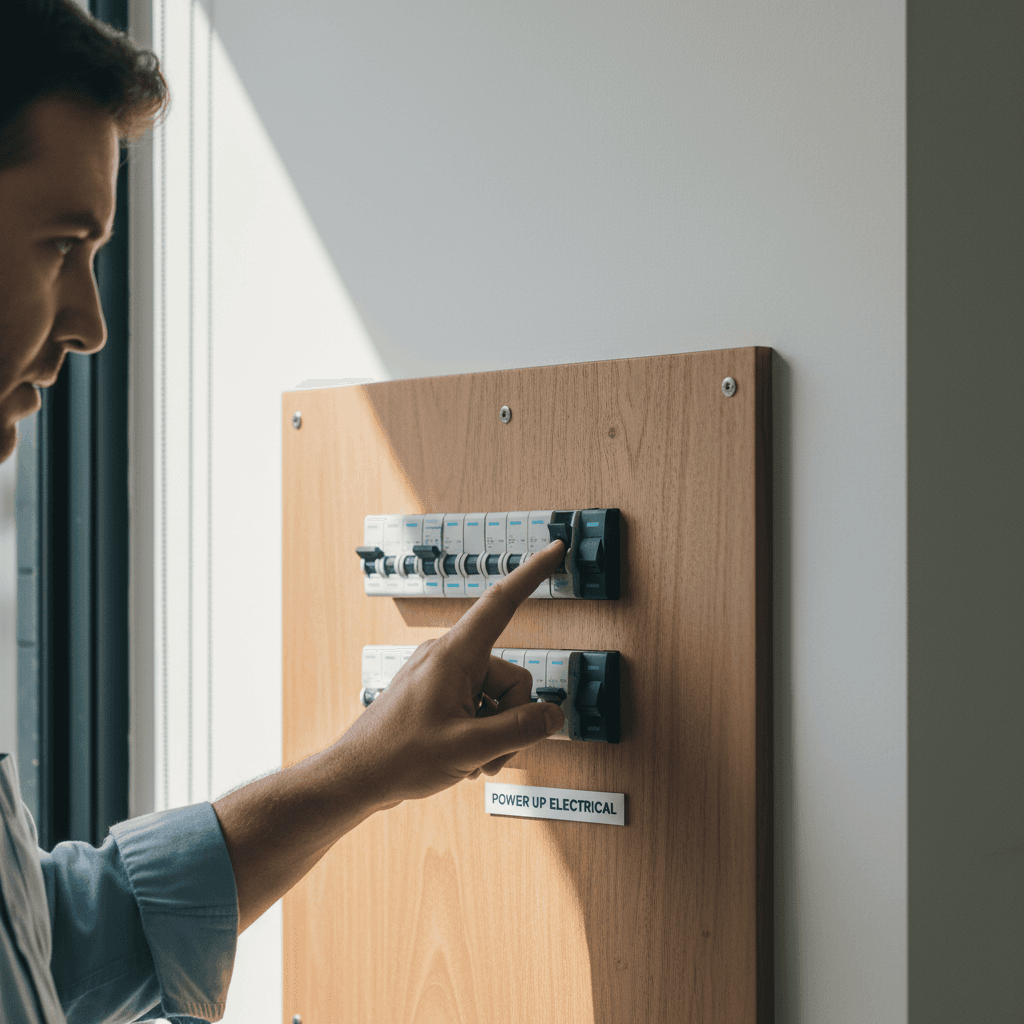
A circuit breaker that keeps tripping is not broken. It is working. The breaker is doing exactly what it is supposed to do: detecting a problem on that circuit and cutting power before the cable overheats or before you take a shock. The question is what the problem actually is.
The call I get most often is some version of "the breaker trips, I reset it, it trips again, what do I do?" Here is the diagnostic process, starting with what you can safely check yourself and ending with what needs a sparky.
What the trip is telling you
Your switchboard has at least two types of protective device, and they trip for different reasons.
An MCB (circuit breaker) trips when too much current flows through the circuit. Too many appliances, a short circuit, a faulty motor drawing excessive current.
An RCD or safety switch trips when it detects a difference between current flowing out and current returning. This means some current is going somewhere it should not, usually to earth through an insulation fault or through a person.
An RCBO does both. One device, two trip mechanisms.
Knowing which one tripped matters because the diagnostic steps are different. Look at the device in the switchboard. If it is wider than the others and has a "T" test button, it is an RCD or RCBO. If it is a standard width breaker with no test button, it is an MCB.
The four causes of a breaker that won't reset
Cause 1: Overload. Too much load on the circuit. Classic example: two bar heaters, a kettle and a toaster all on the same power circuit in an older home with only one or two circuits for the whole house. The breaker trips on thermal overload, but if you reset it without removing the load, it trips again immediately or after a few minutes once it heats up again. This is the most common cause and also the most benign.
Cause 2: Short circuit. A fault in the wiring or in an appliance where the active conductor is making contact with the neutral or earth. A short circuit produces an extremely high current spike that trips the breaker instantly. When a short circuit is present, the breaker will trip the moment you reset it, sometimes with a loud click or a small flash.
Cause 3: Earth leakage (RCD trip). If it is an RCD or RCBO tripping, the circuit has an insulation fault somewhere. An appliance with a damaged cord, a powerpoint with water in it, old wiring with degraded insulation. The RCD trips because 30 milliamps is diverting to earth instead of returning on neutral.
Cause 4: Dead or damaged breaker. This is less common but it happens. A breaker that has been tripping repeatedly, particularly one that has survived a short-circuit event, can develop a trip threshold that is too low. It trips at normal loads it previously handled fine. You can usually identify this by elimination: if the breaker trips even with the circuit completely unloaded.
The safe DIY checks to run first
Before ringing a sparky, try these steps in order:
Step 1: Note whether it tripped as an MCB or RCD. This sets the direction of your investigation.
Step 2: For an MCB trip, reduce the load. Unplug everything on that circuit. Then try resetting. If the breaker holds with nothing plugged in, add appliances back one at a time. When it trips, you have found the problem: either a faulty appliance or too many appliances for that circuit.
Step 3: For an RCD or RCBO trip, unplug everything on the circuit first, then reset. If it holds, the fault is in an appliance. Add appliances back one by one to find the culprit. Signs of a faulty appliance include a burning smell from it, physical damage to the cord, or moisture ingress.
Step 4: If the breaker trips with nothing plugged in, the fault is in the fixed wiring, not an appliance. Stop. Do not keep resetting it. This needs a sparky.
When to stop and ring a sparky
Stop the DIY checks and ring me if:
- The breaker trips immediately on reset with nothing plugged in. Fixed wiring fault.
- You can see or smell burning around the powerpoint or socket. Active fault.
- The breaker has visible scorch marks on the face or surrounding panel. Arcing has occurred.
- You can hear a clicking or buzzing from the board before or after resetting.
- The breaker feels mechanically wrong when you try to reset it, it is stiff, it will not latch, or the reset is spongy.
- Any time someone has received a shock from an appliance on that circuit.
There is no shame in ringing for these. Repeated tripping is a clear signal the wiring needs investigation, and leaving a wiring fault undiagnosed is how electrical fires start.
What I do when I arrive on-site
When I get a call like this, I bring a clamp meter, an RCD tester and an insulation resistance tester (a Megger). Here is the process:
- Confirm which type of device tripped and whether it resets under no load.
- If RCD trip: Run the circuit under no-load first, measure insulation resistance on the circuit wiring with everything disconnected. This tells me whether the fault is in the wiring or an appliance.
- If MCB trip: Clamp the circuit under load to confirm the actual current draw. If the draw is at or over the rating, the circuit needs to be split or the appliance removed. If the draw is well within rating, the breaker itself is suspect.
- Locate and repair or replace the faulty component: appliance, socket, section of cable, or the breaker itself.
- Re-test with the RCD tester before leaving.
Most of these faults are resolved in a single call-out. If it is a wiring fault that requires opening walls, I will explain the scope before we start and quote it properly.
Ring me on 0411 054 811 if your breaker is not staying on. I work across Carina, Camp Hill, Norman Park and the surrounding suburbs and can usually attend the same day for a fault like this.
, John
I'm John, local Camp Hill sparky, fully licensed, fixed-price quotes, lifetime workmanship warranty. Ring me direct on 0411 054 811 or send a quick message.
Keep reading
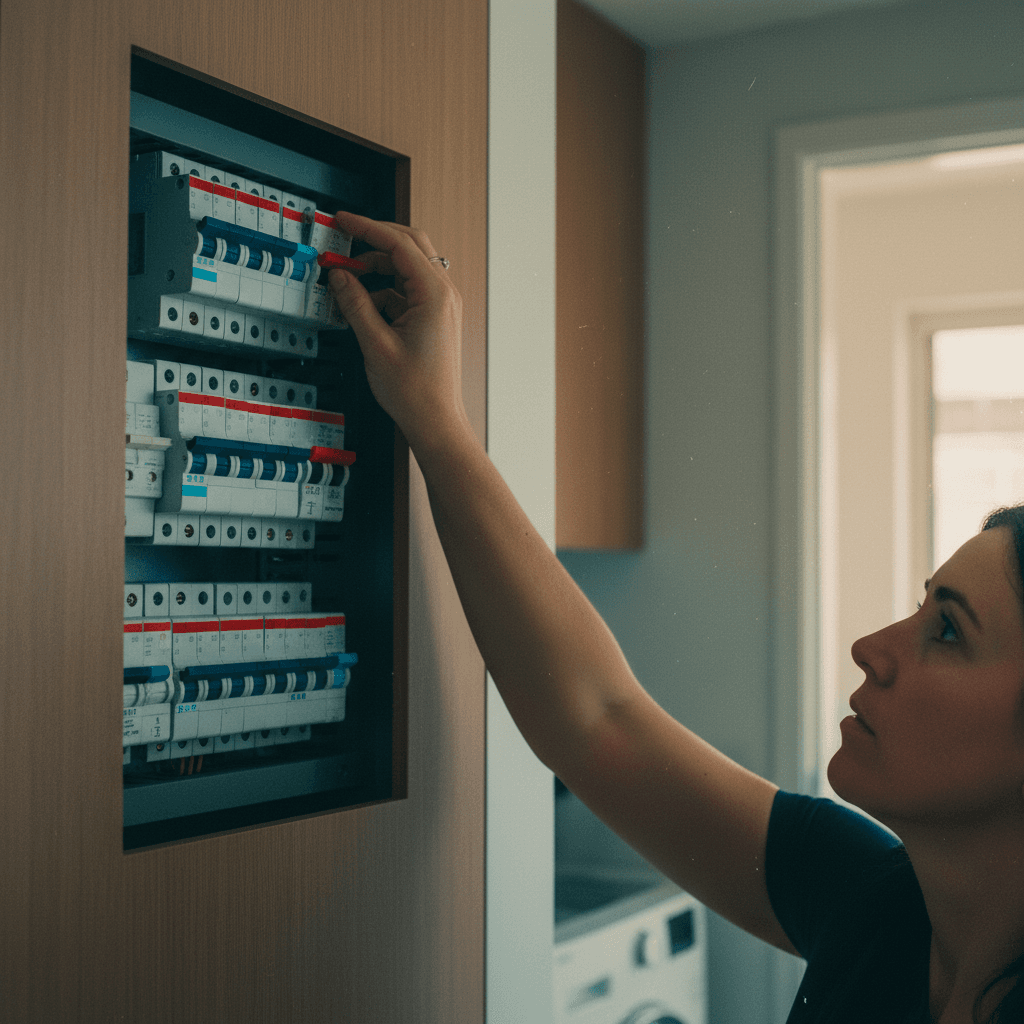
Why does my switchboard keep tripping? (Brisbane troubleshooting from a sparky)
The four common reasons a Brisbane switchboard trips, what each one means, and the order to investigate them in, without making it worse.
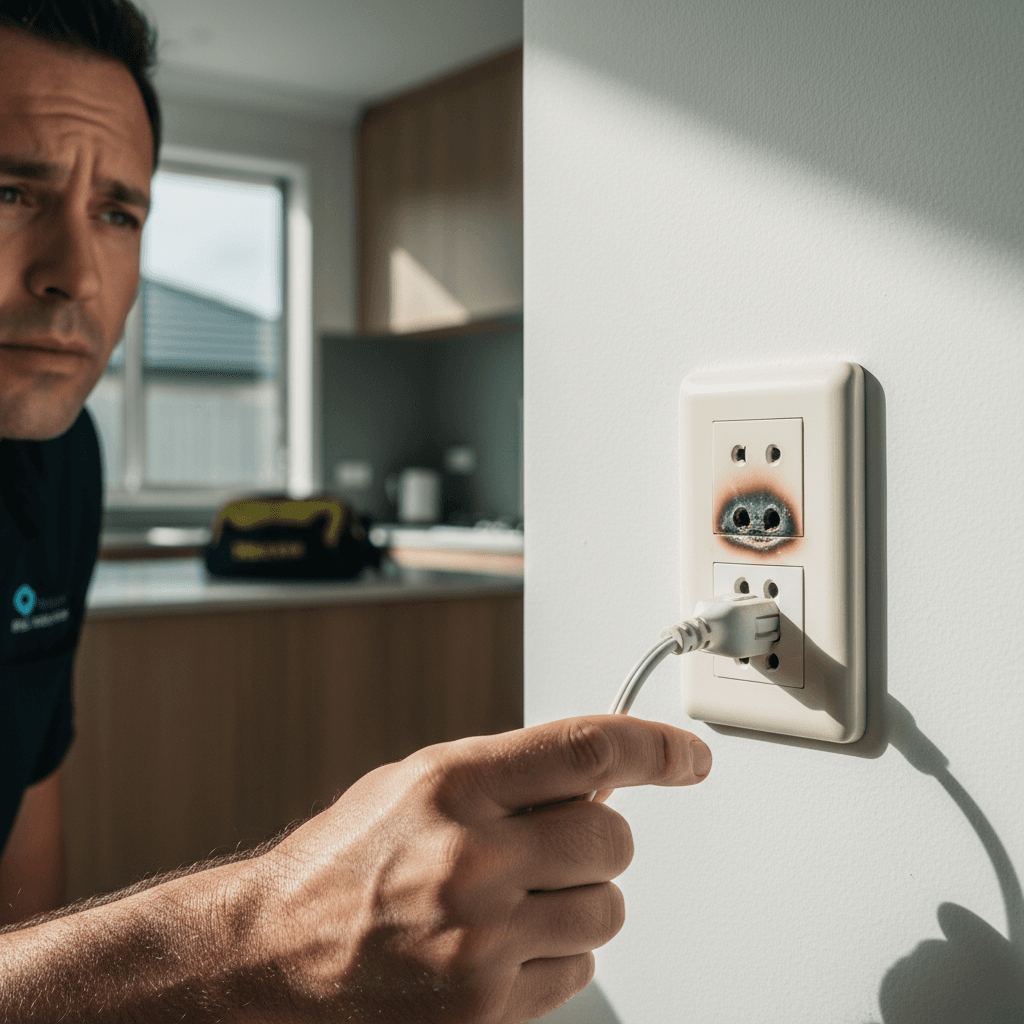
Burning smell from a powerpoint? Read this first.
A faint burning-plastic smell at a powerpoint is one of the most common pre-fire warnings in Brisbane homes. Here's what to do in the next 60 seconds.