
Certificate of Electrical Safety (QLD): what it is, when you need one, and what it actually proves
Form 16, CES, Compliance Certificate: confused? Here's the QLD-specific paperwork your sparky must give you, and the legal weight each carries.
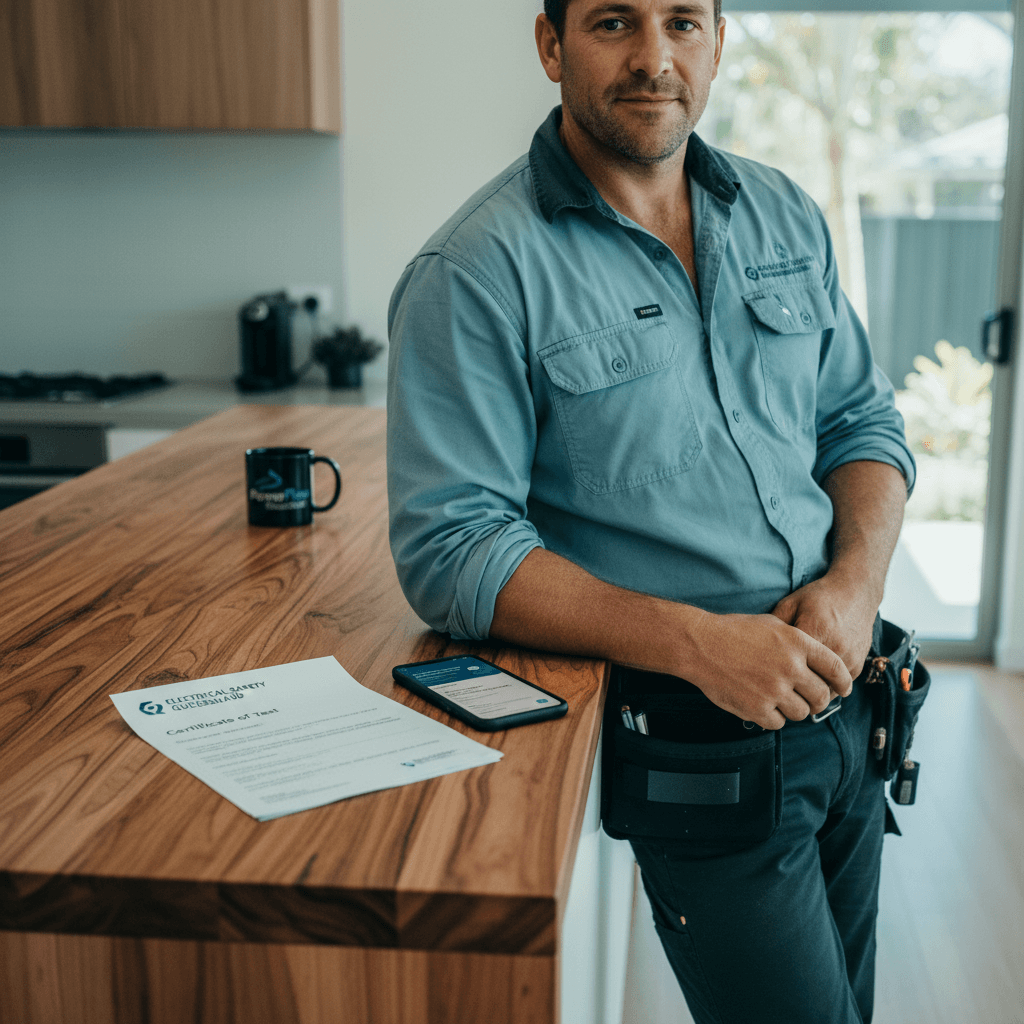
Every time a licensed sparky completes electrical work in QLD, they're required to issue a certificate. This certificate is the legal record that the work was done, that it was tested, and that the licensed person who did it takes responsibility for it. Yet I regularly speak to homeowners in Coorparoo and Greenslopes who have had work done and never received one, and have no idea what they're missing.
Here's the full picture on electrical certification in QLD.
What the certificate actually is
In QLD, when a licensed electrician completes electrical installation work, they must issue a Certificate of Test (also called a Compliance Certificate, or sometimes abbreviated CES for Certificate of Electrical Safety in older documentation). This document is issued by the electrician who did the work and states:
- What work was done (a description of the installation).
- The property address.
- The date the work was completed.
- The results of the mandatory tests carried out (insulation resistance, polarity, earth continuity, RCD trip times).
- The licence number of the supervising electrician.
- A declaration that the work complies with the relevant standards.
This is a legally required document under the Electrical Safety Act 2002 (QLD). It's not optional, it's not something you have to ask for, it's something the sparky must provide.
When one is required
A Certificate of Test is required for any licensed electrical installation work. That includes:
- Switchboard upgrades or modifications.
- Adding new circuits (new powerpoints, lighting circuits, oven circuits, EV charger circuits).
- New sub-mains to a garage, granny flat, or shed.
- Installation of fixed appliances requiring electrical connection (hot water systems, air conditioning, pool equipment).
- Any rewiring or extension of existing wiring.
Minor maintenance work (replacing a like-for-like powerpoint or light fitting that doesn't involve any new wiring) may not require a certificate, but the threshold is conservative and most licensed sparkies issue one anyway.
It does not cover: smoke alarm installation as a standalone item (smoke alarms have their own compliance certificate), and it doesn't cover building electrical work that's subject to a full building inspection under QBCC.
CES vs Form 16: the difference
This is where homeowners get confused, and honestly, the terminology has shifted over the years.
Certificate of Test (CES): Issued by the licensed electrician for work they have personally carried out and tested. This is the standard certificate for 95% of residential electrical work. You get one of these after a switchboard upgrade, a new circuit, a hot water system installation.
Form 16 (Electrical Safety Certificate): This is an inspection certificate issued by a licensed electrical inspector (not just a licensed electrician) for more significant or prescribed electrical work. Form 16s are required for new homes, major extensions, and certain prescribed work types. An inspector from the Electrical Safety Office (ESO) or an approved private certifier signs off on Form 16 work.
For most residential jobs in Carina and Greenslopes, you'll receive a Certificate of Test, not a Form 16. If someone tells you they've done a major renovation and provided a Form 16, that represents a higher level of oversight than a standard Certificate of Test.
The important distinction: a Certificate of Test is self-certified by the sparky who did the work. A Form 16 involves independent inspection.
What it actually proves (and what it doesn't)
A Certificate of Test proves:
- A licensed electrician carried out the work.
- They tested it and recorded the results.
- It was compliant with the relevant standards at the date of installation.
- There is a legally accountable person who signed off on it.
It does not prove:
- That the rest of the house's wiring (done by previous tradespeople) is compliant.
- That the installation will remain compliant forever without maintenance.
- That the testing caught every latent defect (testing is thorough, but not omniscient).
When I issue a Certificate of Test, I'm taking legal responsibility for the specific scope of work described on it. I'm not taking responsibility for the 1965 wiring that was in the house before I got there.
Why it matters when selling
If you're selling a Coorparoo or Greenslopes home and have had significant electrical work done, the Certificate of Test is one of the documents your conveyancer will look for. It's evidence that work was done legally, by a licensed person.
Some things to know:
- If electrical work was done on your home without a certificate, that work is "unlicensed" from a documentation standpoint, even if it was physically safe. Insurers can use this against you in a claim.
- Buyers' solicitors are increasingly asking for electrical compliance certificates as part of due diligence, particularly for older homes.
- The smoke alarm compliance certificate is separate and also required for sale. They cover different things.
- If you're selling and you've lost your certificates, contact the electrician who did the work: they should have copies. If you can't track them down, a new pre-sale inspection and any remedial work will generate fresh certificates.
What to do when the certificate is missing
This comes up fairly often when homeowners renovate, sell, or have insurance claims. The work was done, but nobody issued (or nobody kept) the paperwork.
If you can't locate a certificate for recent work:
- Contact the electrician who did the job. They are legally required to keep records. Ask for a copy.
- If the company has folded or you can't find them, check whether the work was significant enough to require a Form 16 (if so, there may be a record with the ESO).
- For older work where no certificate ever existed, the pragmatic path is to have the installation re-tested by a current sparky, remedy any deficiencies, and issue a fresh certificate on the current state.
If you suspect work was done without a licence at all (by a handyman, a previous owner, or a "sparky mate"): contact the Electrical Safety Office. Unlicensed electrical work is a serious safety and legal issue, and the ESO has channels for reporting and remediation.
A practical note on record-keeping: When you receive a Certificate of Test, store a digital copy. Photograph it, email it to yourself, put it in a folder in your cloud storage. Paper certificates get lost in moves, floods, and renovations. A digital copy takes 20 seconds to make and is retrievable years later when you need it at settlement.
The ESO also maintains a register of licensed electrical contractors in QLD. If you want to verify that the person who did your work held a valid licence at the time, you can search the ESO's online licence register. This is publicly available and takes about 30 seconds.
Home insurance and certification: Some home insurers in QLD now ask about the electrical certification status of significant work when you lodge a claim. If you have a claim related to electrical work (fire, damage, personal injury) and you cannot produce a certificate showing the work was done by a licensed person and tested correctly, the insurer may dispute liability. This is not universal, but it's a real risk for uncertified work. The $150-$200 cost of having a sparky certify remediated work is trivial compared to the potential cost of a disputed claim.
If you're in Coorparoo, Greenslopes, or Carina and have any doubt about the certification status of electrical work at your property, ring me on 0411 054 811. I can inspect and certify current state, or issue certificates for remediated work.
, John
I'm John, local Camp Hill sparky, fully licensed, fixed-price quotes, lifetime workmanship warranty. Ring me direct on 0411 054 811 or send a quick message.
Keep reading
Selling or renting your QLD home? The smoke alarm checklist nobody warned you about
If you're selling or leasing a QLD home in 2026, you must have compliant smoke alarms or the sale / lease can't proceed. Here's the checklist.
DIY electrical work in QLD: what's legal, what's not, and what'll get you fined
QLD has some of Australia's strictest electrical-DIY laws. Here's what you can do as a homeowner, what you can't, and the actual penalties.